




THANK YOU
FOR YOUR INFORMATION
One of our expert will be in touch with you…


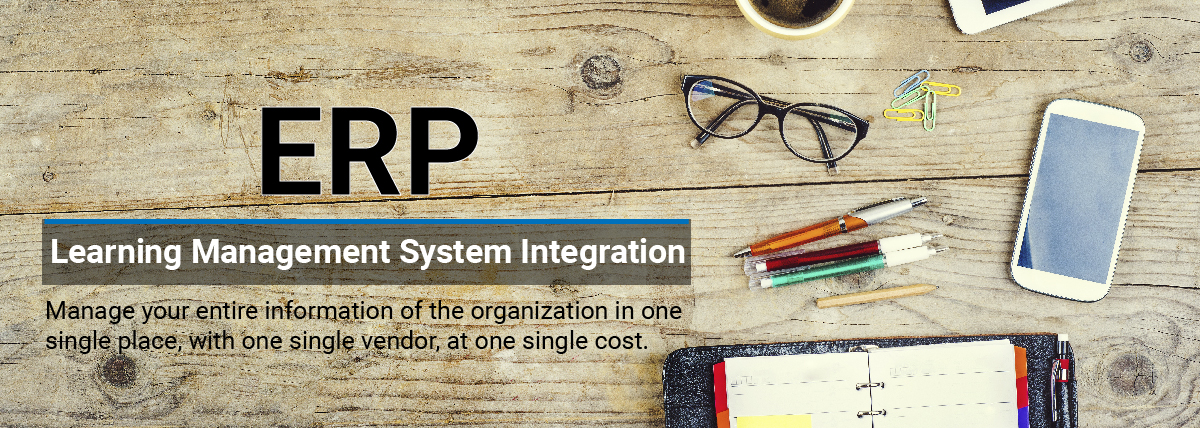
Running a modern company without Enterprise Resource Planning (ERP) software is virtually unthinkable. ERP solutions streamline core business processes, making operations faster and more effective. However, critical training, onboarding, and employee development activities are frequently trapped in isolated, standalone software.
An Enterprise Resource Planning (ERP) and Learning Management System (LMS) integration connects your central administrative database with your digital training platform to enable real-time data sharing across your entire enterprise. Paradiso’s ERP Learning Management System Integration bridges the gap between administration and education, unifying your corporate training, HR, CRM, and operational workflows into a single, cohesive ecosystem.
Most growing businesses and training organizations rely on separate software platforms for distinct operational functions—one tool for HR, another for CRM, a third for finance, and an independent LMS for course delivery. Operating in these fragmented environments creates severe operational friction:
Paradiso’s ERP LMS Integration eliminates these barriers by delivering one unified platform, one login, lower operational overhead, and maximum efficiency. While traditional enterprise software caters primarily to large conglomerates, Paradiso makes enterprise-grade LMS integration accessible and scalable for small, medium, and large organizations alike.
To eliminate manual data handling, flexible integration methods connect your central software infrastructure:
Accelerate course sales and streamline client acquisition. Our embedded CRM automates sales processes, executes targeted email and text message campaigns, and builds customer loyalty by creating long-lasting links. By connecting course interest directly with your sales funnel, you close training sales faster.
Paradiso LMS binds tightly with your core ERP platform (including SAP, Oracle, and Salesforce), providing unprecedented control over training initiatives. Monitor training budgets, assign mandatory compliance modules, and track employee skill progression directly from your platform. Furthermore, teams gain access to an extensive array of over 10,000 pre-built eLearning courses, enabling immediate training without leaving the ERP environment.
Beyond traditional administration (ERP) and structured coursework (LMS), Paradiso integrates Learning Experience Platform (LXP) capabilities. This delivers AI-driven, self-directed content recommendations tailored to individual career goals while preserving centralized corporate oversight.
Manage multiple branch offices, sub-organizations, franchises, or external commercial clients under a single platform using multi-tenancy and white-label branding. Each portal maintains custom branding, user roles, and distinct course catalogs while syncing reporting centrally to the primary ERP.
Eliminate scheduling conflicts and administrative mix-ups with online calendar synchronization.
Transform annual employee evaluations into a continuous, data-driven feedback loop. Our ERP LMS integration provides the tools and techniques required to manage projects effectively. For instance, an employee enrolled in a project management course can record specific learning goals and map milestones against actual performance metrics, ensuring strategic planning, continuous skill development, and seamless project execution.
Automate routine business operations with intuitive workflow software that sets up in minutes. Furthermore, generate custom reports without writing code using a drag-and-drop report builder or custom SQL queries, and schedule automatic report delivery via email in CSV or XLS formats.
Organizations that unify their operational and educational platforms achieve significant performance improvements:
| Performance Metric | Operational Impact |
|---|---|
| +47% Increase | Higher learner engagement through personalized, LXP-driven learning pathways. |
| –38% Reduction | Overall reduction in administrative overhead and training software licensing costs. |
| 2× Faster | Accelerated onboarding time for new hires and corporate trainees. |
| –52% Reduction | Measurable reduction in departmental workforce skill gaps. |
| 35% Accuracy Boost | Increase in fee handling, transcript, and course synchronization accuracy. |
| 40% Workload Reduction | Decrease in manual administrative data entry across institutions. |
| 55% Visibility Boost | Greater student and employee record visibility among users through mobile system access. |
Following a structured 5-step integration methodology ensures a smooth deployment:
Protecting sensitive personal, financial, and academic records is essential during system integration:
Integrating your ERP with an enterprise-grade LMS eliminates the administrative burdens, data silos, and security risks of operating fragmented systems. By unifying employee data, compliance tracking, project management learning, and real-time reporting under one login, your organization gains the operational agility needed to scale efficiently while delivering measurable training ROI.
Before scheduling your demo, tell us about your current technology setup:

