



Quick Answer: What Is Adaptive Learning and How Does It Work?
Adaptive learning is a personalized educational approach that adjusts learning content, difficulty, and progression based on individual performance and knowledge gaps. Using assessments, learner data, and adaptive technology, it helps students and employees receive relevant training at the right stage of their development. Unlike traditional learning methods that follow a fixed structure, adaptive learning allows learners to progress according to their understanding. It is used in schools, higher education, and corporate training to support skill development and improve learning efficiency.
Introduction
Adaptive learning is changing how students and employees engage with educational content. By leveraging data to create personalized learning paths, adaptive learning enables learners to progress according to their knowledge and abilities rather than following the same training sequence. This approach helps educators address individual learning needs while giving organizations more flexibility in delivering training and development programs.
Adaptive learning isn’t just about student success. It is also transforming how organizations approach employee training, skill development, and continuous learning.
In this article, we’ll explore how adaptive learning works, its benefits, use cases, and the role it plays in shaping the future of education and workforce training.
What Is Adaptive Learning?
Adaptive learning refers to a data-driven approach where educational content is tailored based on the learner’s individual progress, engagement, and performance. By analyzing assessment results and learning activities, adaptive learning systems can adjust the learning path, helping students receive content that matches their current understanding.
With adaptive learning, educational tools move away from a one-size-fits-all approach. Instead, students or trainees interact with content that matches their learning pace and proficiency level. Whether in K-12 classrooms, universities, or corporate training programs, adaptive learning helps educators address individual knowledge gaps and provide targeted learning support.
These adjustments can be managed through predefined learning rules or more advanced AI-powered systems. For example, a learner who demonstrates a strong understanding of a topic may progress to advanced material, while someone struggling with the same concept may receive additional explanations or practice activities.
This makes learning more responsive to individual needs without requiring instructors to manually redesign every learning path.
How Does Adaptive Learning Work?
Adaptive learning systems use learner information to determine which activities or resources should come next.
The process generally involves four key steps:
- Assess Learner Knowledge: Initial assessments identify existing skills, strengths, and areas requiring improvement.
- Analyze Learning Progress: The platform monitors responses, assessment results, and course activity to understand learner performance.
- Adjust Learning Content: Based on the results, learners may receive additional exercises, different content, or more advanced activities.
- Provide Feedback and Track Improvement: Ongoing assessments help educators and learners understand progress and identify further learning needs.
For example, two employees completing the same cybersecurity training may follow different learning paths. An employee familiar with phishing risks might move directly to advanced scenarios, while another who struggles with identifying suspicious emails may receive additional examples and practice.
Both employees work toward the same training objective, but their learning activities are adjusted according to their understanding.
Connect Employee Skill Assessments with Personalized Learning Paths
Discover how Paradiso helps L&D teams map competencies, assess employee readiness, and recommend learning activities that address individual development needs.
Adaptive Learning LMS
By using adaptive learning in a Learning Management System (LMS), students and employees can take a more active role in their training. After accessing the eLearning platform, learners may follow a recommended learning path based on assessment results, existing knowledge, or development goals.
The LMS can then provide customized information, suggest relevant courses, and help learners identify areas where improvement is needed. This approach supports a more focused learning experience while helping instructors monitor progress and provide additional guidance.
The purpose of adaptive learning in an LMS is to make training more relevant to each learner’s requirements and support progress toward defined educational objectives.
Businesses use adaptive learning platforms and learning management systems to support employee growth. Artificial intelligence can strengthen personalization by analyzing learner performance and recommending suitable content, while rule-based systems can adjust learning sequences using predefined conditions.
L&D teams can use these capabilities to monitor employee progress, identify skill gaps, and manage learning experiences across departments.
Benefits of Adaptive Learning in Education and Corporate Training
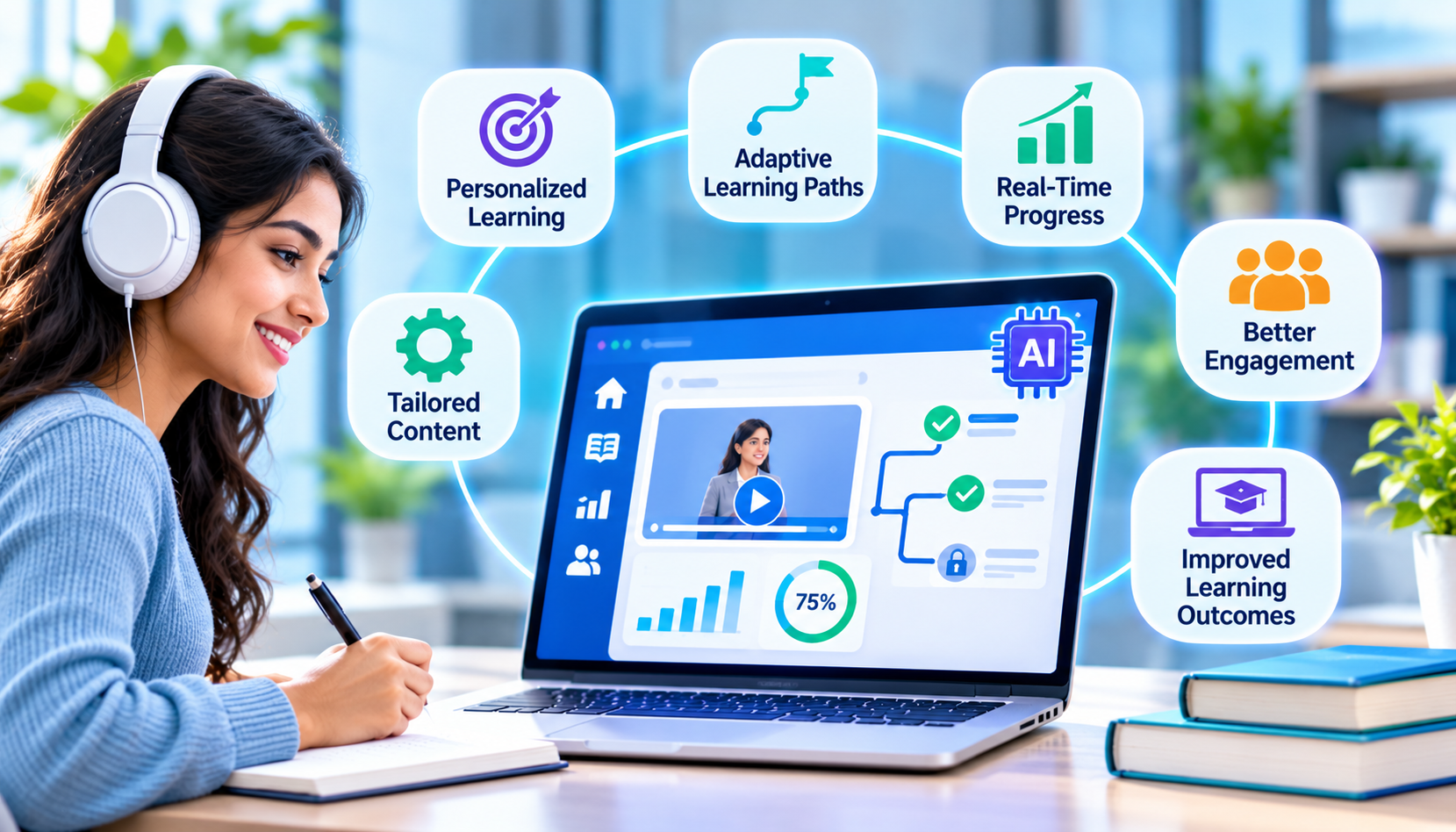
Adaptive learning provides several advantages for learners, educators, and organizations by making training more relevant and responsive to individual requirements.
- Personalized Learning Experiences: Content and learning pathways can be adjusted according to learner performance and knowledge levels.
- Improved Learning Efficiency: Learners can focus on areas requiring additional practice rather than repeatedly reviewing concepts they already understand.
- Targeted Skill Development: Organizations can identify knowledge gaps and assign relevant learning activities to help employees develop specific capabilities.
- Better Progress Visibility: Assessments and learning analytics provide instructors with information about learner performance and areas where additional support may be needed.
- Flexible Learning Delivery: Adaptive approaches can support learners across different locations, schedules, and educational environments.
These benefits depend on how effectively the learning content, assessments, and adaptive rules are designed. Personalization should support clear learning objectives rather than simply change the content learners see.
Top Adaptive Learning LMS Platforms and Solutions
Different learning platforms support personalization through adaptive content, AI-powered recommendations, assessments, or configurable learning paths.
The following four solutions serve different requirements, from enterprise training management to specialized adaptive learning technology.
1. Paradiso LMS
Paradiso LMS is a customizable learning management solution designed to help businesses and educational institutions create, deliver, and manage personalized training experiences.
The platform combines learning administration, assessments, reporting, and AI-supported capabilities to help organizations deliver relevant learning content based on employee roles, development requirements, and learning progress.
Its flexible architecture supports educational institutions and small, medium, and large enterprises looking to manage different learning programs through a centralized system.
Key Features:
- Personalized Learning Paths: Create structured learning journeys based on learner roles, skills, and development needs.
- AI-Powered Learning Recommendations: Use AI-supported capabilities to identify learning needs and recommend relevant content.
- Assessment and Progress Tracking: Evaluate learner understanding through quizzes, assessments, and completion records.
- Learning Analytics: Monitor course activity, learner progress, and training outcomes through reporting dashboards.
- Integration Capabilities: Connect learning activities with supported HR, business, and educational applications.
- Scalable Learning Management: Manage training across different departments, learner groups, and locations.
Paradiso LMS is suitable for organizations that need a comprehensive learning platform combining training administration with personalized learning and workforce development capabilities.
Unlike a standalone adaptive learning engine, it also supports broader requirements such as course management, compliance training, reporting, and enterprise integrations.
Evaluating an LMS for Personalized Learning? Compare the Essentials
Get Paradiso’s LMS Buyer’s Guide to review important features, scalability, integrations, deployment options, and vendor selection criteria before choosing a learning platform.
2. Skillwell Adapt (Formerly Realizeit)
Skillwell Adapt, formerly known as Realizeit, provides dedicated adaptive learning technology designed to personalize learning paths according to individual knowledge and performance.
The platform uses adaptive assessments and knowledge verification to identify learning needs and guide learners toward relevant content and practice. Skillwell brings the former Realizeit adaptive learning technology together with other learning capabilities under its current brand.
Key Features:
- Adaptive Learning Pathways: Adjust the sequence of learning activities based on learner knowledge and progress.
- Knowledge Verification: Use assessments to identify what learners understand and where additional support is needed.
- Targeted Learning Content: Direct learners toward relevant material instead of requiring everyone to follow an identical sequence.
- Personalized Practice: Support reinforcement where learners have gaps in understanding.
- Learner Progress Insights: Help training teams identify learning needs and monitor development.
Skillwell Adapt is relevant for organizations that want dedicated adaptive learning and knowledge verification rather than primarily a mobile-first course delivery platform.
3. Adaptemy
Adaptemy specializes in adaptive learning technology that helps educational publishers, institutions, and learning providers create personalized digital learning experiences.
The company develops adaptive learning solutions that can integrate with existing learning management systems, allowing organizations to introduce personalized learning capabilities without necessarily replacing their current platforms.
Adaptemy’s technology uses learner performance data and adaptive learning models to support individual learning pathways, diagnostic assessments, and targeted learning activities.
Key Features:
- Adaptive Learning Technology: Adjust learning experiences based on individual learner performance and knowledge requirements.
- Diagnostic Assessments: Identify learning gaps and help determine suitable starting points.
- Curriculum Mapping: Organize learning content according to educational objectives and subject requirements.
- LMS Integration: Connect adaptive learning solutions with platforms such as Moodle, Canvas, Blackboard, and Brightspace.
- Learning Analytics: Provide insights into learner performance, course effectiveness, and areas requiring improvement.
- Custom Learning Solutions: Support educational publishers and institutions developing adaptive digital learning products.
Adaptemy is particularly suited to educational publishers, higher education institutions, and organizations that want to introduce dedicated adaptive learning technology into their existing learning environment.
Unlike a general-purpose LMS, Adaptemy focuses primarily on the adaptive learning components that can be integrated with broader educational platforms.
4. Moodle
Moodle is a widely used open-source learning management system that offers extensive customization options and supports different approaches to digital learning.
Its flexibility allows educational institutions and businesses to develop structured courses, assessments, and personalized learning pathways through configurable platform features.
Moodle supports conditional access to course materials based on factors such as assessment grades, activity completion, and learner groups.
For example, instructors can configure additional learning activities for students who do not achieve a required assessment score, while learners who demonstrate sufficient understanding can progress to the next module.
Key Features:
- Conditional Learning Paths: Control access to activities based on grades, course completion, and other predefined criteria.
- Course and Content Management: Create and organize learning resources, assessments, and activities.
- Progress Tracking: Monitor learner participation, activity completion, and assessment performance.
- Customization Options: Extend platform capabilities through supported plugins and integrations.
- Open-Source Flexibility: Configure the learning environment according to institutional requirements.
- Collaborative Learning Tools: Support discussions, assignments, and group-based learning activities.
Moodle is suitable for organizations that need a customizable learning management platform and have the resources to configure learning pathways according to their requirements.
However, standard Moodle LMS does not automatically provide advanced AI-driven adaptive learning simply through its core course management features. More sophisticated personalization may require additional plugins, integrations, or specialized adaptive learning technology.
How to Choose the Right Adaptive Learning Platform
Choosing the right adaptive learning solution depends on whether an organization needs a complete LMS, a specialized adaptive learning engine, or additional personalization features for an existing platform.
Before selecting a solution, consider the following:
- Learning Objectives: Determine whether the main goal is personalized instruction, employee training, academic education, or skill development.
- Adaptation Capabilities: Check whether the platform uses predefined learning rules, automated recommendations, or real-time performance-based adjustments.
- Assessment and Analytics: Evaluate how the platform identifies knowledge gaps, monitors progress, and measures learning outcomes.
- Integration Requirements: Consider whether the solution must connect with an existing LMS, HR system, or educational technology platform.
- Scalability and Accessibility: Ensure learners can access training effectively across supported devices, locations, and accessibility needs.
For example, an organization seeking enterprise-wide training administration and personalized learning paths may consider Paradiso LMS. Educational publishers needing a specialized adaptive learning engine may find Adaptemy more relevant.
Skillwell Adapt focuses on dedicated adaptive learning paths and knowledge verification, while Moodle provides flexibility for organizations that want to configure learning experiences using an open-source LMS.
The most important consideration is whether the platform can deliver the type of personalization your learners need while supporting your organization’s wider training requirements.
Conclusion
Adaptive learning is more than a passing trend. It is changing how educational institutions and organizations deliver training by making learning experiences more responsive to individual knowledge, progress, and development needs.
Whether in classrooms or corporate training programs, adaptive approaches can help learners focus on relevant content, receive targeted support, and develop skills at an appropriate pace.
However, effective adaptive learning depends on thoughtful instructional design, suitable technology, and continuous evaluation of learning outcomes. Organizations should look beyond personalized course recommendations and consider how their chosen platform supports practical skill development.
For businesses and educational institutions, platforms such as Paradiso LMS can help combine personalized learning pathways, assessments, and learner analytics with centralized training management.
Explore Adaptive Learning for Your Organization
Share your learning goals and training requirements. Discover how Paradiso can support personalized learning paths, employee development, and learner progress tracking.