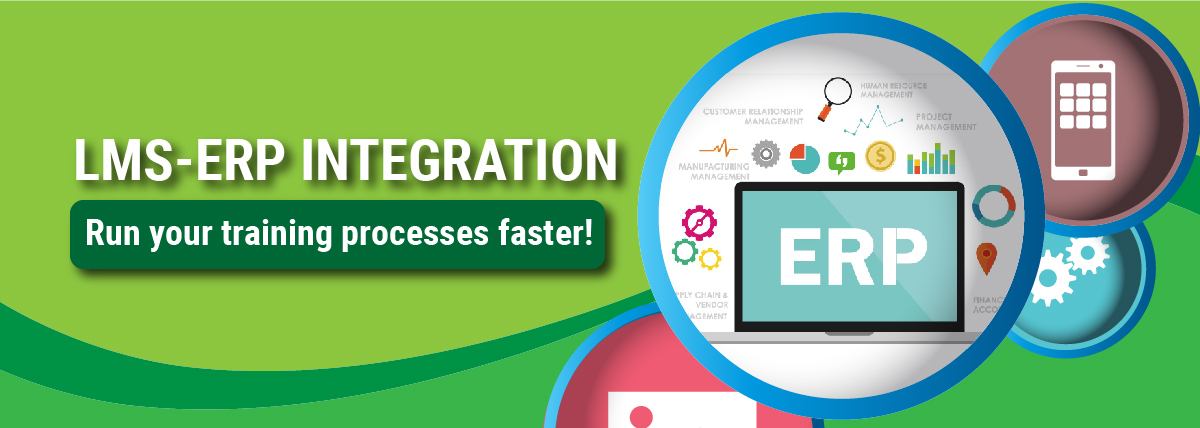




In today’s fast-paced business world, disconnected systems lead to inefficiencies, wasted time, and missed opportunities. Whether you’re managing employee training or customer-facing education, integrating your Learning Management System (LMS) with Enterprise Resource Planning (ERP) can transform your training processes, save costs, and boost efficiency. In this blog, we’ll explore how Paradiso’s LMS-ERP integration provides a unified solution to streamline your training operations.
What is LMS-ERP Integration?
LMS-ERP integration refers to the connection between your Learning Management System (LMS) and your Enterprise Resource Planning (ERP) system. This integration allows for seamless data flow between both systems, unifying employee training data with broader business operations. By connecting employee development data with core business functions like HR, payroll, and performance management, this integration ensures a smooth workflow and real-time insights.
For instance, when employees complete training modules in the LMS, their performance and progress are automatically synced with the ERP system. This eliminates the need for duplicate data entry and enables HR departments to track and analyze employee performance in real-time.
Key Benefits of LMS-ERP Integration for Training Operations
1. Improved Data Flow and Real-Time Syncing
LMS-ERP integration ensures that training data and employee information are always up to date. For example, when an employee finishes a course, the data is automatically updated in both the LMS and ERP systems. This eliminates the need for manual updates and ensures HR and training managers always have access to the most current information.
2. Centralized Reporting and Analytics
With LMS-ERP integration, businesses can pull detailed, comprehensive reports across systems in real-time. By merging learning data with business data, companies can track employee training outcomes, compliance rates, and performance metrics all in one place. This centralized reporting helps managers make better, data-driven decisions.
3. Streamlined Workflows and Automation
Manual tasks such as manually transferring training data into HR or payroll systems are automated with LMS-ERP integration. Training progress can trigger automated HR actions like performance evaluations or payroll adjustments, drastically improving operational efficiency.
4. Enhanced Compliance and Auditing
Compliance tracking is critical for industries like healthcare, finance, and manufacturing. LMS-ERP integration allows businesses to automatically track and report on mandatory compliance training, ensuring that all employees meet regulatory requirements. This integration simplifies the auditing process and reduces the risk of compliance violations.
5. Scalable Training Programs
Whether you have 10 employees or 10,000, LMS-ERP integration ensures that your system can handle any volume of training data without additional manual effort. As your business grows, your training programs can scale seamlessly without the need to invest in new systems or software.
How LMS-ERP Integration Improves Efficiency
LMS-ERP integration not only automates many processes but also increases organizational efficiency by centralizing data. Rather than managing multiple software platforms for different functions, LMS-ERP integration provides a single, unified platform. Here’s how it improves operational efficiency:
- Data Syncing: Training data flows seamlessly between systems without any duplication of effort.
- Improved Communication: HR, training, and IT teams can access the same information at the same time.
- Better Decision-Making: With access to real-time data, businesses can make informed decisions about employee development and organizational needs.
For example, a retail company could automatically assign mandatory training to new hires as part of their onboarding process, then track completion in both the LMS and ERP system, saving time and reducing human error.
Use Cases for LMS-ERP Integration Across Industries
1. Healthcare
In healthcare, training is critical to ensure that staff complies with industry standards and regulations. An LMS-ERP integration allows healthcare organizations to track certifications and training completions automatically, ensuring they meet all regulatory requirements. It also streamlines employee onboarding and continuous professional development for staff.
2. Manufacturing
Manufacturers must comply with stringent safety regulations and ensure that employees receive regular safety training. With LMS-ERP integration, manufacturing companies can assign and track safety training automatically, ensuring compliance and reducing the administrative burden on training managers.
3. Finance & Banking
For financial institutions, regulatory compliance is crucial. By integrating LMS with ERP, training programs related to anti-money laundering (AML) or data privacy can be tracked in real-time. The integration ensures that employees are trained according to regulatory standards, helping the organization stay compliant.
4. Retail & E-Commerce
Retailers can use LMS-ERP integration to ensure their front-line staff receives consistent, updated training on new products, customer service, and compliance. Whether training is online or in-person, the integration provides an efficient way to manage learning progress and measure outcomes.
How Paradiso’s LMS-ERP Integration Works
At Paradiso Solutions, our LMS-ERP integration offers a seamless, customizable solution that connects your Learning Management System (LMS) with leading ERP platforms like SAP, Microsoft Dynamics, and Oracle. Our solution ensures:
- Real-Time Data Syncing: Training and HR data are updated automatically across both systems.
- Customizable Workflows: Tailor the integration to fit your specific needs, whether it’s for compliance, onboarding, or product training.
- Scalable Solutions: As your company grows, our LMS-ERP integration scales with your needs.
With Paradiso’s ERP for training companies, you gain an unprecedented level of control over your operations. Our flexible and integrated system allows businesses to manage training budgets, track employee development, and automate processes—all from one platform.
FAQs About LMS-ERP Integration
Q1: What are the main benefits of LMS-ERP integration?
The integration allows businesses to centralize training and employee data, streamline workflows, improve compliance tracking, and generate comprehensive reports, all while saving time and resources.
Q2: How long does it take to integrate LMS with ERP?
The timeline depends on the complexity of the systems and the level of customization required. At Paradiso, our integration team works closely with clients to ensure a smooth implementation.
Q3: Is Paradiso’s LMS-ERP integration scalable?
Yes, our solution is designed to scale with your business, no matter how large or small. Whether you have 100 employees or 10,000, Paradiso’s integration will grow with you.
Conclusion
LMS-ERP integration is a game-changer for businesses looking to improve training processes and operational efficiency. By connecting your LMS and ERP systems, you can automate workflows, centralize reporting, and ensure compliance—all while reducing the manual effort required to manage training programs.
At Paradiso, our goal is to provide innovative, customizable solutions that empower your team to manage training more efficiently and effectively. Reach out to us today to see how we can help you integrate your LMS and ERP systems for optimal results.