


In 2026, the hospitality and tourism industry remains one of the most dynamic sectors, with constant shifts in consumer preferences, technology, and service expectations. Staying ahead of these changes requires a well-trained workforce that can adapt quickly to evolving demands. One of the most effective ways to ensure this is by implementing a Learning Management System (LMS). An LMS serves as a flexible and comprehensive platform that enables businesses to streamline training, ensure compliance, and foster continuous professional development.
In this blog, we will explore how integrating an LMS can enhance hospitality and tourism management, boost employee performance, and improve overall business operations. Whether you’re managing a hotel, a tour company, or a resort, using an LMS will allow you to manage training programs efficiently and ensure a high standard of service across your organization.
What is an LMS and How Can It Help the Hospitality Industry?
A Learning Management System (LMS) is a software platform designed to deliver, manage, and track training and development programs. In the hospitality and tourism industry, an LMS enables businesses to create personalized training programs for employees in various roles. These can range from customer service and compliance to technical skills such as hotel management systems and booking platforms.
For businesses in the hospitality and tourism sector, having access to an LMS can:
- Streamline employee training: Employees across different locations can access the same training materials, ensuring consistency.
- Enhance compliance: Industry-specific compliance standards can be easily incorporated into the training content, ensuring that employees remain up-to-date with local and international regulations.
- Improve operational efficiency: By providing employees with the right tools and skills, businesses can optimize their day-to-day operations and provide exceptional service to guests.
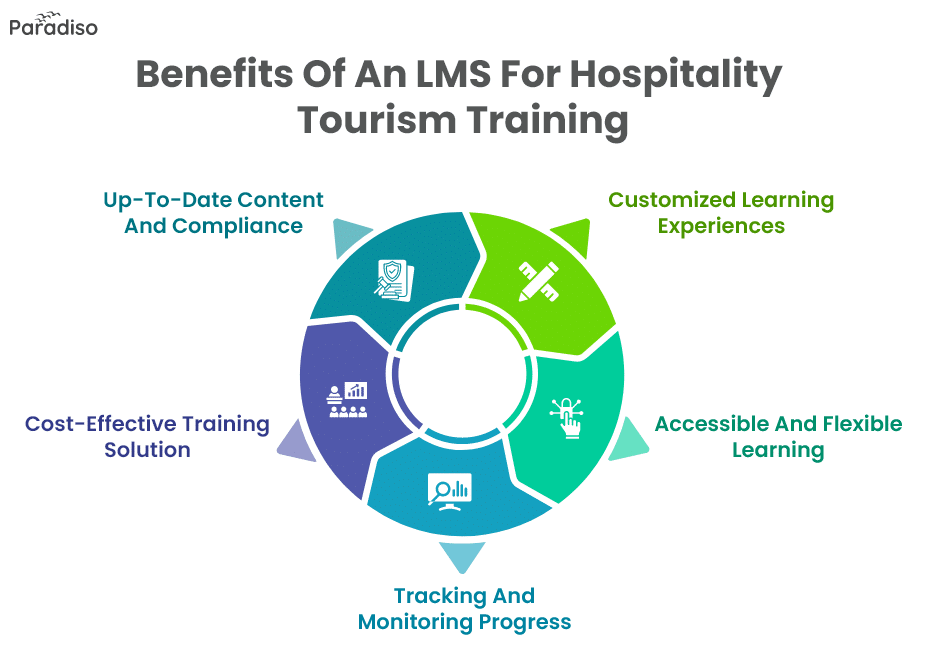
Benefits of Using an LMS for Hospitality and Tourism Training
1. Tailored Learning Experiences
An LMS provides the ability to customize training programs to suit different roles within the hospitality industry. Whether it’s front-line staff, management, or even seasonal employees, training can be tailored to address specific needs and job functions. For instance, guest services might require training in customer interaction, while back-office staff might need skills in administrative tools and software.
Customizing content for employees in specific departments such as housekeeping, front desk, or tour guides ensures that learning is both relevant and efficient.
2. Flexible and Accessible Training
The hospitality industry is known for irregular work hours and a globally dispersed workforce. An LMS offers flexibility by allowing employees to access training materials whenever and wherever they need them. This flexibility significantly increases engagement and completion rates, as employees are no longer restricted by rigid schedules.
For businesses, this means that training can be delivered on-demand, making it easier for employees to complete courses during slower periods, reducing disruption to normal operations.
3. Progress Tracking and Performance Evaluation
An LMS provides management with valuable insights into employee learning progress through reports and analytics. These tools allow organizations to track course completions, quiz scores, and overall performance, helping managers identify where further training may be required.
Having these insights ensures that the training is effective, and employees who require additional support can be identified early, leading to more tailored and efficient learning interventions.
4. Cost-Effective Training
Traditional training methods, such as in-person seminars or travel-based workshops, can be costly and time-consuming. An LMS eliminates these costs by offering a centralized, scalable solution that reduces travel, venue, and instructor fees.
Additionally, the ability to update and distribute digital learning content across the workforce reduces the need for printed materials, lowering overall costs and administrative workload.
5. Up-to-Date Content for Compliance
The hospitality industry is highly regulated, with laws and standards that vary by region and function. An LMS allows companies to keep training content up-to-date with the latest regulations.
For example, an LMS can quickly distribute changes to health and safety protocols, food handling certifications, or GDPR compliance training, ensuring that employees are always aligned with current industry requirements.
How to Choose the Right LMS for Hospitality and Tourism Management
Selecting an LMS for your hospitality business requires careful consideration of your goals and operational needs. Below are key factors to consider:
1. Aligning the LMS with Business Objectives
Before selecting an LMS, clearly define your company’s training objectives. Do you need to train new hires, enhance the skills of your existing workforce, or meet compliance requirements? Understanding these goals will help you choose an LMS that can be tailored to meet your needs.
For example, if your goal is to onboard employees faster, look for an LMS that supports mobile learning and quick course rollouts. If compliance is your primary concern, choose an LMS with strong reporting features that allow you to track certifications and recertification dates.
2. Essential Features for Hospitality Training
- Mobile-Friendly Design: Many hospitality employees work in environments where accessing a desktop computer isn’t practical. Ensure the LMS is mobile-friendly, allowing employees to access training materials on their smartphones or tablets.
- Multilingual Support: In the global hospitality sector, employees often speak different languages. Look for an LMS that offers multilingual capabilities to accommodate a diverse workforce.
- Customization: Customizable content allows you to create industry-specific modules or branded courses that align with your company’s culture and policies.
3. Scalability and Future Growth
As your business expands, so will your training needs. Choose an LMS that can scale with your organization, whether that means adding more users, creating new courses, or accommodating new locations. Cloud-based LMS solutions are particularly effective for this, offering the flexibility to grow without the need for costly hardware upgrades.
4. Vendor Reputation and Support
It’s crucial to research LMS vendors before making a decision. Choose a vendor known for reliability, strong customer service, and technological advancements. The effectiveness of the LMS will depend on the vendor’s ability to provide timely updates and technical support as needed.
5. SaaS vs. Self-Hosted Solutions
While self-hosted solutions may appear cost-effective at first, SaaS-based LMS platforms are often the better option in the long run due to their ease of use, automatic updates, and reduced IT infrastructure requirements.
6. Free Trials and Demos
Before committing to a vendor, take advantage of free trials and demos to test how the LMS fits with your business needs. This hands-on evaluation can help identify potential issues and ensure that the platform meets your training objectives.
Paradiso LMS: A Solution for the Hospitality and Tourism Industry
Paradiso LMS offers a robust, scalable platform tailored to the specific needs of the hospitality and tourism sector. With features such as mobile learning, multilingual support, and customizable content, Paradiso LMS empowers organizations to deliver high-quality, consistent training across global teams. Whether for onboarding, compliance training, or professional development, Paradiso LMS is a comprehensive solution that helps businesses stay competitive and compliant.
Conclusion
Integrating an LMS into your hospitality and tourism management strategy is essential to remain competitive in an industry marked by rapid change and high customer expectations. Whether you are a hotel chain, tour operator, or resort, an LMS offers a scalable, cost-effective solution to ensure your employees are trained, compliant, and continuously improving.
By choosing the right LMS and customizing it to your needs, you can enhance employee performance, streamline operations, and maintain the highest standards of service. Paradiso LMS is here to help you take your training programs to the next level, ensuring your workforce is always ready to meet the challenges of tomorrow.