


The K-12 education landscape has undergone a remarkable transformation. By 2026, blended learning—the strategic integration of traditional face-to-face teaching with digital tools—has become the gold standard for delivering personalized, engaging, and effective education,
representing a modern blended learning approach adopted by schools worldwide. With the rise of advanced blended learning software, schools are now able to create more adaptive, data-driven, and student-centric learning environments that improve both engagement and outcomes. Research from the International Association for K-12 Online Learning indicates that students in these hybrid models perform better, reinforcing the growing importance of online and blended learning in modern education
Understanding K-12 Blended Learning: 2026 Trends
As the digital landscape advances, several key trends are defining the future of the classroom and shaping what a modern blended learning environment looks like, supported by evolving blended learning strategies that enhance personalization and engagement:
- Data-Driven Personalization: Modern Learning Management Systems (LMS) utilize big data to tailor instruction. Real-time tracking helps teachers identify strengths and gaps instantly, leading to more targeted support.
- AI and Adaptive Learning: AI-powered tools create adaptive environments that provide customized feedback. These systems automate administrative tasks, allowing teachers to focus on differentiated instruction.
- Flipped Classroom & Remote Synergy: Students engage with instructional materials online at their own pace, freeing up classroom time for collaborative, hands-on activities – one of the most effective blended learning examples used in modern education..
- Immersive Technologies (AR/VR): Augmented and Virtual Reality have transformed experiential learning, offering interactive science labs and virtual field trips that deepen understanding regardless of physical location.

Essential Criteria for Selecting Software in 2026
Choosing the right blended learning software is vital for creating scalable educational experiences and effective blended learning classrooms. Educators must evaluate software based on these critical pillars:
- User Accessibility & Inclusivity: Platforms must support multiple devices (desktops, tablets, smartphones) and comply with WCAG standards. This ensures that learners with diverse needs and skills face zero technical barriers.
- Scalability & Cloud Flexibility: The platform must grow with your institution. Cloud-based solutions offer seamless scalability and customizable modules to fit specific curricula.
- System Interoperability: Smooth integration with Student Information Systems (SIS) and standards like SCORM, xAPI, and LTI is non-negotiable for a cohesive digital ecosystem.
- Security & Data Privacy: Protecting student data is paramount. Software must comply with FERPA, GDPR, and COPPA using high-level encryption and secure authentication.
Top Blended Learning Tools for K-12 Success: 2026 Leaders
The following platforms represent some of the best blended learning software options available today,positioning them among leading blended learning platforms that support modern K-12 classrooms.
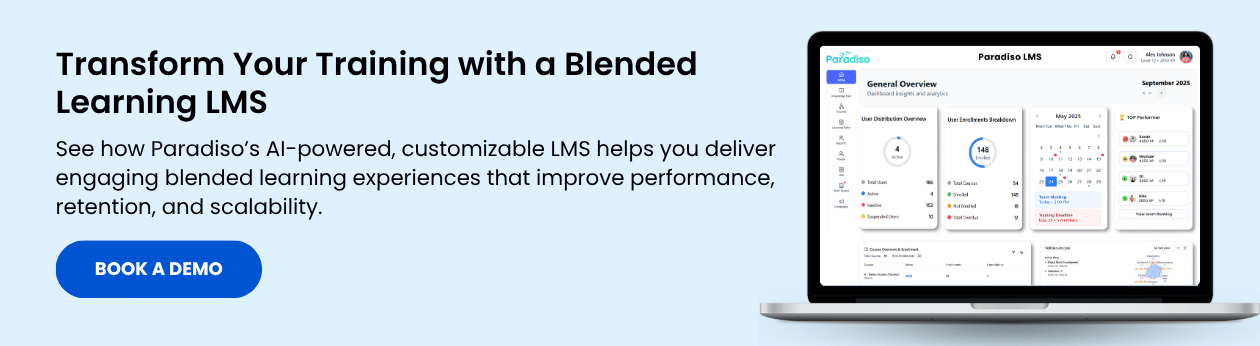
- Paradiso LMS – The top choice for complex K-12 environments and large-scale deployments. As a leading blended learning software, it is renowned for its multi-tenant architecture, AI-driven personalization, and extensive third-party integrations. It bridges the gap between classroom management and enterprise-grade analytics.
- Google Classroom – A staple for seamless communication and resource sharing within the Google Workspace ecosystem.
- Canvas – Appreciated for its user-friendly interface and mobile responsiveness. The University of California, Berkeley, famously shifted to Canvas for blended courses, seeing a 25% increase in student engagement.
- Khan Academy – A powerhouse for self-paced mastery, offering diagnostic tools that identify specific student needs in math and science.
- Edpuzzle – Transforms passive video viewing into an interactive formative assessment tool by embedding questions directly into the content.
- Seesaw – A leading digital portfolio platform that encourages younger learners to showcase creativity through multimedia submissions.
- Nearpod – Facilitates real-time interaction through live polls, collaborative boards, and immersive VR activities.
Deep Dive: Empowering Educators with Paradiso LMS
Paradiso LMS offers a comprehensive suite designed to foster efficient and data-informed learning environments, making it a powerful blended learning software that supports various blended learning models for institutions looking to scale personalization and engagement.
Customized Learning Paths
Recognizing that no two students learn at the same pace, Paradiso allows educators to craft Adaptive Learning Paths. Teachers can tailor lessons to various learning styles—visual, auditory, or kinesthetic—ensuring every student receives the appropriate level of challenge.
Gamification & Engagement
To boost motivation, Paradiso incorporates badges, leaderboards, and achievement points. These elements turn learning into an interactive “quest,” promoting healthy competition and a sense of accomplishment among younger learners.
Advanced Analytics for Intervention
The platform’s detailed dashboards provide real-time insights into student activity. Educators can identify at-risk students early and modify instruction accordingly—a strategy proven effective by global organizations like Siemens AG, which used Paradiso to reduce onboarding and training times by 30%.
Overcoming Implementation Obstacles
Shifting to a digital-first model comes with challenges. Success requires a proactive approach:
- Professional Development: Success begins with equipping educators with pedagogical strategies for the digital age, not just technical “how-to” sessions.
- Technical Infrastructure: Investing in reliable, cloud-based platforms ensures that “dead zones” or outdated hardware don’t hinder student progress.
- Continuous Improvement: Use LMS data and student feedback to create an iterative cycle of enhancement, ensuring the curriculum remains resilient and adaptable.
Conclusion: Embracing a Future-Ready Education
Blended learning is no longer just an upgrade, it has become the foundation of how modern K-12 education works. Schools that embrace this shift are not simply adopting new tools, they are building learning environments that are flexible, inclusive, and centered around real student needs.
The real impact comes from choosing the right blended learning software that goes beyond content delivery and actively supports personalization, engagement, and data-driven decision-making at scale. When implemented thoughtfully, solutions like Paradiso LMS enable educators to move past traditional limitations and focus on creating meaningful learning experiences.
As we move further into 2026 and beyond, institutions that invest in the right technology, continuous improvement, and teacher development will be the ones that truly unlock the potential of blended learning and prepare students for long-term success.