
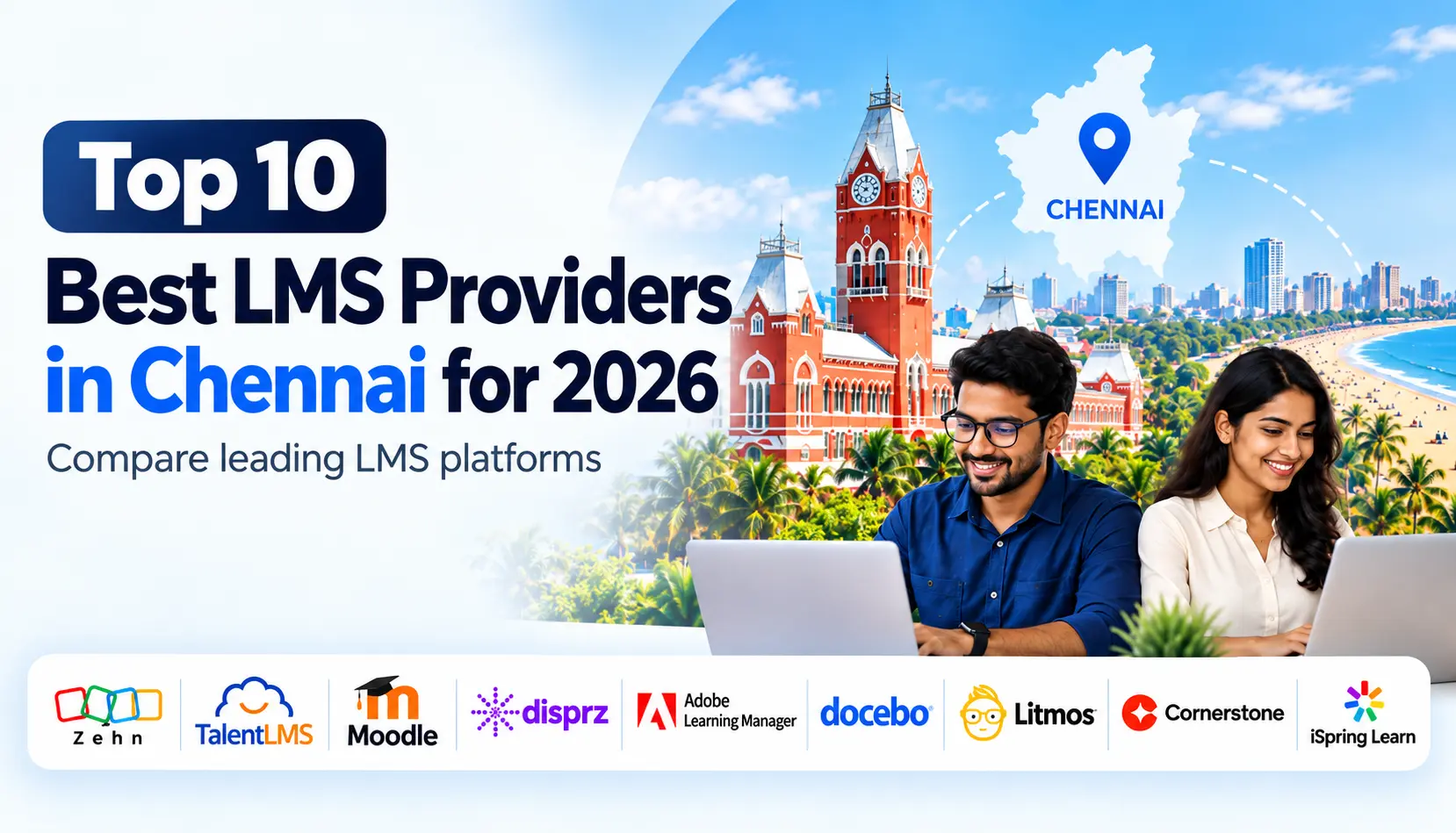




Choosing the right Learning Management System (LMS) in Chennai is an important decision for businesses and educational institutions looking to improve training delivery, learner engagement, and performance tracking.
From IT companies onboarding new employees to manufacturing organizations managing compliance training, Chennai-based organizations have different learning requirements. The right LMS helps centralize training content, automate administrative tasks, track learner progress, and deliver consistent learning experiences across teams.
However, comparing LMS providers can be challenging. Some platforms specialize in enterprise learning, while others focus on employee onboarding, collaborative learning, knowledge management, or academic education.
This guide explores 10 LMS providers available to organizations in Chennai in 2026, comparing their capabilities, ideal use cases, and important purchasing considerations.
Top 10 LMS Providers in Chennai at a Glance
The following comparison highlights established learning management platforms that Chennai-based organizations can evaluate. These providers are not necessarily headquartered in Chennai.
| LMS Provider | Best For | Notable Capabilities |
|---|---|---|
| 1. Paradiso LMS | Enterprise learning and corporate training | AI-powered learning, multi-tenancy, automation, integrations |
| 2. Zoho Learn | Employee onboarding and knowledge management | Knowledge base, course creation, assessments |
| 3. TalentLMS | Small and midsize business training | Course management, learning paths, gamification |
| 4. Moodle LMS | Education and customizable learning | Open-source architecture, plugins, assessments |
| 5. Disprz | Enterprise workforce development | Skills-based learning, frontline training, analytics |
| 6. Litmos | Compliance and employee training | Course delivery, reporting, training automation |
| 7. Cornerstone Learning | Large enterprise learning | Compliance management, skills development, enterprise reporting |
| 8. Absorb LMS | Corporate and extended enterprise training | Learning automation, reporting, customer and partner training |
| 9. 360Learning | Collaborative learning and internal expertise | Collaborative course creation, peer learning, analytics |
| 10. Docebo | Enterprise and extended enterprise learning | AI-enabled learning, automation, integrations |
Note: This is a curated comparison, not a verified ranking by customer satisfaction or Chennai market share. Features and commercial terms should be confirmed with each provider before purchasing.
Not Sure Which LMS Fits Your Organization?
Explore how Paradiso LMS can meet your training needs with AI-powered learning, automation, and flexible integrations.
1. Paradiso LMS
Best for: Corporate training, compliance management, and enterprise learning
Paradiso LMS is a customizable learning management platform designed to support employee training, onboarding, compliance programs, customer education, and partner learning.
For organizations in Chennai managing different departments, teams, or business locations, Paradiso LMS provides a centralized platform for organizing training activities and measuring learner progress.
The platform combines traditional LMS capabilities with AI-powered learning tools, enabling organizations to manage course delivery and create more engaging training experiences.
Key Features
- AI-powered learning: Support personalized learning experiences and AI-assisted training workflows.
- Course and learning path management: Organize structured training journeys for different departments and job roles.
- Compliance training: Assign mandatory courses, manage certifications, and monitor completion.
- Multi-tenancy: Manage separate learning environments for business units, customers, or partners.
- Integrations: Connect the LMS with supported HRMS, CRM, collaboration, and enterprise applications.
- Reporting and analytics: Track enrollments, course completion, assessments, and training performance.
- Mobile learning: Enable learners to access training across supported devices.
- Gamification: Encourage participation through badges, certificates, and other engagement features.
Why Consider Paradiso LMS?
Paradiso LMS can be particularly relevant for Chennai-based organizations seeking to manage different types of training within one platform.
For example, a manufacturing company could use the LMS to assign safety courses, maintain certification records, and track employee completion across multiple facilities.
Similarly, an IT services company could create onboarding learning paths, assign technical training, and monitor employee development activities.
Ideal for: Medium and large organizations, corporate L&D teams, training providers, and companies requiring configurable enterprise learning environments.
Pricing: Contact Paradiso Solutions for pricing based on users, deployment requirements, and selected capabilities. A free LMS offering is also available for eligible smaller organizations.
Explore: Paradiso LMS
Simplify Employee Training with Paradiso LMS
Manage onboarding, compliance training, and employee development from one centralized learning platform.
2. Zoho Learn
Best for: Employee onboarding, internal training, and knowledge management
Zoho Learn combines a learning management system with knowledge management capabilities. It allows organizations to maintain internal documentation, create structured courses, and track employee learning progress.
For Chennai-based businesses already using Zoho applications, Zoho Learn may be worth evaluating as part of their internal training setup.
Key Features
- Course creation using videos, documents, and other learning materials.
- Centralized knowledge bases for policies, SOPs, and employee documentation.
- Learning paths for structured employee development.
- Quizzes, assignments, and learner progress tracking.
- Collaborative content authoring.
- Course completion certificates.
- Mobile access to learning content.
Why Consider Zoho Learn?
Zoho Learn can be useful for organizations that want employees to access training materials and internal knowledge from a common platform.
An IT services company, for example, could organize onboarding courses alongside technical documentation and internal operating procedures.
Ideal for: Small and midsize businesses, internal training teams, and organizations seeking a combined knowledge base and LMS.
Pricing: Free and paid plans are available. Check the official pricing page for current user limits and feature availability.
3. TalentLMS
Best for: Small and midsize business training
TalentLMS is a cloud-based learning management system used for employee onboarding, skills development, and structured training programs.
Its course management and administration capabilities make it an option for organizations looking to launch online training without developing a custom LMS.
Key Features
- Course creation and learning management.
- Employee onboarding and training assignments.
- Quizzes and assessments.
- Learning paths and certification management.
- Gamification and learner engagement features.
- Progress reporting and analytics.
- Integrations with supported business applications.
Why Consider TalentLMS?
TalentLMS may suit growing businesses that need repeatable training processes across teams without extensive customization.
A Chennai-based services company, for example, could use it to standardize new-hire onboarding and deliver recurring professional development courses.
Ideal for: SMBs, growing organizations, and teams seeking cloud-based training administration.
Pricing: Plan-based pricing; verify current learner limits, feature tiers, and billing terms.
4. Moodle LMS
Best for: Educational institutions and organizations requiring customization
Moodle is an open-source learning management system widely used in educational and training environments.
It provides tools for organizing courses, conducting assessments, managing learners, and supporting online or blended learning.
Unlike many proprietary LMS platforms, Moodle offers substantial flexibility through its plugin ecosystem and configurable architecture.
Key Features
- Open-source LMS architecture.
- Course creation and structured learning activities.
- Quizzes, assignments, and grading tools.
- Discussion forums and collaborative learning.
- Learner progress tracking.
- Plugin-based extensions and customization.
- Support for different deployment and hosting arrangements.
Why Consider Moodle?
Moodle can be attractive to schools, universities, and training organizations that need more control over their learning platform.
For example, a Chennai-based educational institution could use Moodle to distribute course materials, conduct online assessments, and support blended classroom instruction.
However, advanced configuration, hosting, upgrades, and administration may require dedicated technical resources or a Moodle service provider.
Ideal for: Schools, colleges, universities, and organizations with technical support capabilities.
Pricing: The open-source software is available without a software license fee, but hosting, implementation, maintenance, and commercial services may involve costs.
5. Disprz
Best for: Enterprise workforce development and frontline learning
Disprz is an enterprise learning and skills development platform focused on workforce capability building.
Its approach combines learning delivery with skills development, making it relevant for organizations that want to connect training programs with employee capability requirements.
Key Features
- Skills-based learning and development.
- Personalized employee learning experiences.
- Frontline workforce training.
- Mobile learning.
- Learning analytics and progress tracking.
- Learning content and program management.
- Enterprise training administration.
Why Consider Disprz?
Disprz may appeal to Chennai-based manufacturing, retail, and enterprise organizations managing workforce development across different job roles.
For example, a business with frontline employees and office-based teams could evaluate Disprz for delivering role-specific training while maintaining visibility into learning participation.
Ideal for: Large organizations, L&D teams, and businesses focused on workforce upskilling.
Pricing: Request a customized quotation.
6. Litmos
Best for: Compliance training and employee development
Litmos is a cloud-based learning management platform designed for managing organizational training programs.
It supports employee learning, compliance requirements, and broader business training initiatives.
Key Features
- Online course delivery.
- Compliance training management.
- Learner tracking and reporting.
- Automated training administration.
- Assessments and certifications.
- Mobile-accessible learning.
- Integrations with supported business applications.
Why Consider Litmos?
Litmos is worth considering when training teams need to manage recurring learning programs and maintain visibility into mandatory course completion.
For example, an organization with annual information security or workplace conduct training requirements could use an LMS to assign courses and monitor outstanding training activities.
Ideal for: Corporate training teams, compliance-focused businesses, and organizations with recurring training requirements.
Pricing: Contact the vendor for a quote.
7. Cornerstone Learning
Best for: Large enterprises with complex training requirements
Cornerstone Learning is an enterprise learning management solution designed for organizations managing learning programs at scale.
Its capabilities are particularly relevant for businesses that require sophisticated learning administration, compliance tracking, and connections between employee skills and development initiatives.
Key Features
- Enterprise learning management.
- Employee development programs.
- Compliance training.
- Learning assignment and administration.
- Skills development capabilities.
- Learning analytics and reporting.
- Enterprise integration options.
Why Consider Cornerstone Learning?
Large organizations in Chennai may require learning systems capable of supporting multiple locations, departments, and employee groups.
Cornerstone Learning is an option to evaluate when reporting complexity, governance, and enterprise learning requirements are central to the purchasing decision.
Ideal for: Large enterprises and organizations with mature L&D operations.
Pricing: Enterprise quotation required.
8. Absorb LMS
Best for: Employee, customer, and partner training
Absorb LMS is a learning management platform used by organizations to deliver structured learning programs to internal and external audiences.
It provides tools for administering courses, monitoring training, and managing learning experiences across different groups.
Key Features
- Learning and course administration.
- Employee onboarding and development.
- Customer and partner training.
- Training automation.
- Learner reporting and analytics.
- Branded learning experiences.
- Integrations with supported enterprise systems.
Why Consider Absorb LMS?
Absorb LMS may be appropriate for Chennai-based businesses that provide training beyond their internal workforce.
For example, a software company could evaluate it for employee enablement alongside structured customer education programs.
Ideal for: Corporate L&D teams, customer education programs, and organizations managing multiple learner audiences.
Pricing: Customized pricing is available through the vendor.
9. 360Learning
Best for: Collaborative learning and employee knowledge sharing
360Learning focuses on collaborative learning, enabling organizations to involve internal subject matter experts in creating and improving training content.
The platform is designed to support structured learning while encouraging employees to contribute knowledge and expertise.
Key Features
- Collaborative course authoring.
- Subject matter expert participation.
- Employee onboarding.
- Peer learning and knowledge sharing.
- Learning management and administration.
- Training analytics.
- Feedback and course improvement workflows.
Why Consider 360Learning?
360Learning may be useful for organizations whose expertise is distributed across teams.
A Chennai-based IT company, for example, could involve experienced technical employees in producing internal training materials, helping share specialized knowledge across departments.
Ideal for: Knowledge-intensive organizations, collaborative L&D teams, and employee enablement programs.
Pricing: Check current plans and enterprise pricing.
10. Docebo
Best for: Enterprise learning and extended enterprise training
Docebo is an enterprise learning platform supporting employee development and training for external audiences such as customers and partners.
The platform includes AI-enabled capabilities and tools for learning administration, automation, and performance reporting.
Key Features
- Enterprise learning management.
- AI-enabled learning capabilities.
- Employee onboarding and development.
- Customer and partner training.
- Training automation.
- Learning analytics.
- Integration capabilities.
- Scalable learning administration.
Why Consider Docebo?
Docebo may be suitable for organizations looking to unify employee and external training programs.
For example, a Chennai-based technology company could evaluate the platform for training employees, implementation partners, and customers through structured learning environments.
Ideal for: Enterprises, software companies, and organizations with extended learning requirements.
Pricing: Contact Docebo for a tailored quotation.
How to Choose the Best LMS Provider in Chennai
Selecting an LMS requires more than comparing feature lists. Organizations should evaluate how each platform supports their specific training objectives, learner requirements, technical environment, and long-term plans.
1. Define Your Training Objectives
Start by identifying what the LMS needs to accomplish.
Common priorities include:
- Onboarding new employees.
- Delivering mandatory compliance courses.
- Training frontline and manufacturing employees.
- Managing technical certifications.
- Supporting customer and partner education.
- Delivering academic or blended learning.
- Tracking workforce skills development.
A company primarily focused on employee onboarding may need a different platform from a university managing thousands of students.
2. Evaluate Ease of Use
An LMS should be manageable for both learners and administrators.
During a product demonstration, examine how easily administrators can create courses, assign learners, generate reports, and update existing content.
Also test the learner experience. Employees should be able to find assigned training, resume incomplete courses, and understand their progress without unnecessary steps.
3. Check Integration Requirements
Before selecting an LMS, determine which existing systems need to exchange information with it.
Depending on the organization, these may include HRMS platforms, CRM systems, identity providers, video conferencing software, or other enterprise applications.
For example, integration with an HRMS may help reduce manual work when onboarding or updating employee records.
Organizations requiring enterprise connectivity can explore LMS integration capabilities and confirm the supported integration methods with shortlisted vendors.
4. Assess Reporting and Compliance Management
Organizations running mandatory training programs should evaluate how the platform tracks completion and certifications.
Important questions include:
- Can administrators track overdue training?
- Can training assignments be automated?
- Are certification expiration reminders available?
- Can reports be filtered by team, department, or location?
- Can training records be exported when required?
These capabilities can be particularly important for organizations operating in regulated or safety-sensitive environments.
5. Evaluate Mobile Learning and Accessibility
Mobile learning may be important for employees who do not regularly use desktop computers.
For example, field teams, sales representatives, and manufacturing workers may need flexible access to assigned courses.
When evaluating an LMS, test its mobile experience, accessibility features, supported browsers, and language capabilities using your organization’s actual training content.
6. Compare Total Cost of Ownership
The initial subscription fee is only one part of the LMS investment.
Consider implementation, migration, integrations, administrator training, support, customizations, and future expansion.
A lower subscription price may not represent the lowest overall cost if the system requires substantial technical effort or additional services.
LMS Pricing in Chennai
LMS pricing can vary depending on platform capabilities, learner volume, deployment approach, and commercial terms.
| Pricing Model | How It Works | Suitable For |
|---|---|---|
| Per-user subscription | Fees are based on the number of licensed users | Organizations with predictable learner populations |
| Active-user pricing | Charges depend on learners active during a billing period | Organizations with fluctuating participation |
| Tiered subscription | Plans provide different capabilities or usage limits | SMBs and growing businesses |
| Enterprise quotation | Pricing is customized to organizational requirements | Large or complex deployments |
| Open-source deployment | Software may be free to license, with separate operating costs | Institutions with technical expertise |
Looking for an LMS That Fits Your Budget?
Find the right LMS solution based on your team size, training requirements, and business goals.
Costs to Check Before Buying
When requesting an LMS quotation in Chennai, ask providers to clarify:
- Minimum user commitments.
- Setup and implementation fees.
- Data migration charges.
- Integration costs.
- Technical support coverage.
- Training and onboarding services.
- Storage and content hosting limits.
- Contract renewal terms.
- Applicable taxes and currency conversion.
Compare vendors using the same learner count and feature requirements so that the quotations are meaningful.
Best LMS for Corporate Training in Chennai
Chennai has organizations operating across IT services, manufacturing, automotive, healthcare, financial services, and other industries. These sectors often require different approaches to employee training.
IT and Technology Companies
IT organizations may need learning platforms for new-hire onboarding, cybersecurity awareness, technical certifications, and continuous skills development.
An LMS can help standardize training across project teams while enabling managers to monitor employee progress.
Manufacturing and Automotive Organizations
Manufacturing businesses may require safety training, equipment-related learning, operational procedures, and employee certification tracking.
When evaluating an LMS, these organizations should prioritize mobile accessibility, reporting, structured assignments, and support for frontline employees.
Healthcare Organizations
Healthcare organizations may use learning management systems to organize staff onboarding, internal procedures, safety training, and professional development.
Training administrators should evaluate reporting capabilities, access controls, certification management, and applicable data protection requirements.
Financial Services Organizations
Financial services teams often require structured onboarding, recurring policy training, and assessment records.
A centralized LMS can support consistent training delivery and help administrators identify employees who have not completed required learning activities.
For a closer look at organizational training requirements, explore corporate learning management systems.
Best LMS for Schools and Colleges in Chennai
Educational institutions should evaluate learning management systems according to instructional and academic requirements.
A school or college may need features such as:
- Course and classroom organization.
- Assignment submission and grading.
- Teacher–student communication.
- Online quizzes and assessments.
- Learner progress monitoring.
- Video conferencing support.
- Blended learning capabilities.
- Role-based access controls.
Moodle is one example of a platform frequently evaluated for academic learning because of its configurable architecture and course management capabilities.
Other commercial LMS platforms may also support educational training, but institutions should confirm academic workflows and integration compatibility before purchasing.
The most appropriate LMS depends on whether the institution needs a virtual classroom, academic course management, professional training, or a combination of these capabilities.
Why Consider Paradiso LMS for Your Organization?
Organizations comparing LMS providers in Chennai may want a platform that supports corporate training, employee development, compliance management, and external learning without managing separate systems for every program.
Paradiso LMS provides configurable learning management features and AI-powered tools designed to support these requirements.
Its capabilities include structured learning paths, certification tracking, gamification, reporting, multi-tenancy, and connections with supported enterprise applications.
For businesses evaluating their LMS options, the most useful next step is to test the platform using real training scenarios.
See how Paradiso LMS could support your training programs.
Frequently Asked Questions About LMS Providers in Chennai
1. Which LMS is best for companies in Chennai?
2. What is the difference between an LMS provider and an eLearning company?
3. Is there a free LMS available for small businesses in Chennai?
4. Can LMS software support corporate training and employee onboarding?
5. What LMS features are important for manufacturing companies?
6. Can an LMS integrate with HRMS software?
7. How much does an LMS cost in Chennai?
8. Which LMS is suitable for schools and colleges in Chennai?
9. Can an LMS support training in multiple languages?
10. What should businesses check before buying an LMS?
Conclusion
Choosing among the best LMS providers in Chennai involves understanding how each platform aligns with an organization’s learning goals.
Some LMS platforms are better suited to academic course delivery, while others focus on employee onboarding, corporate training, skills development, or extended enterprise learning.
For organizations with complex learning requirements, it is important to consider scalability, reporting, integrations, administration, and long-term cost alongside the initial subscription price.
Compare shortlisted providers carefully, request demonstrations, and test the workflows that matter most to your organization.
Businesses exploring customizable enterprise learning can also review LMS vendors in India
Ready to Transform Training Across Your Organization?
Discover how Paradiso LMS can streamline training delivery, improve learner engagement, and provide actionable learning insights.