




In the fast-paced business world of 2026, the importance of upskilling and reskilling your employees has never been more critical. Organizations that prioritize continuous learning and adaptability are better positioned to thrive in the face of technological advancements and shifting industry paradigms.
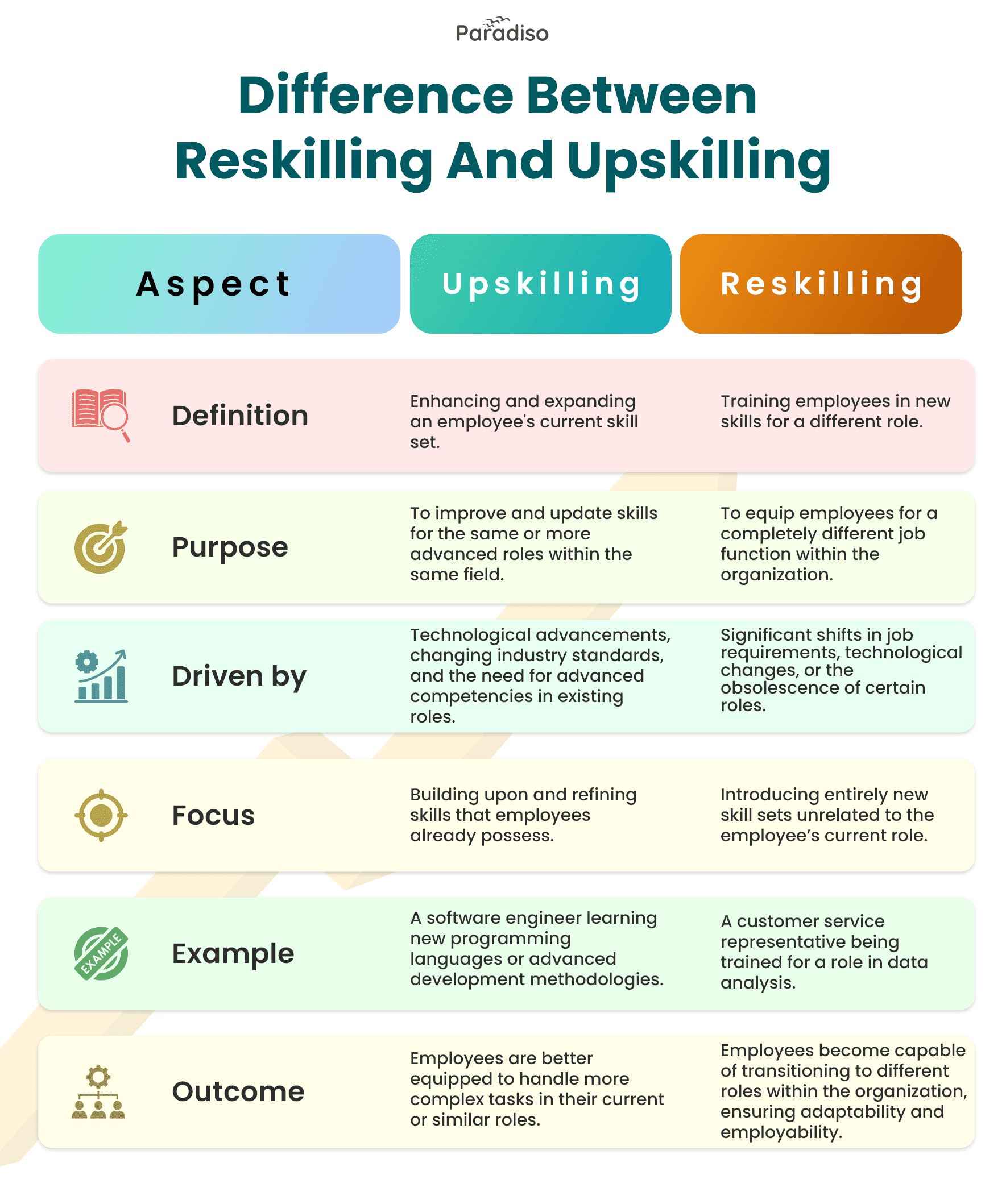
Upskilling, which focuses on enhancing existing skills for more complex roles, and reskilling, which equips employees with entirely new competencies, are fundamental strategies for bridging skill gaps. By investing in these development initiatives, companies not only prepare their workforce for imminent changes but also foster a culture of innovation and lifelong learning.
This blog explores why upskilling and reskilling are indispensable in the modern workforce, the benefits they offer, and how tools like Paradiso LMS can empower organizations to deliver personalized and scalable learning experiences.
To deliver effective employee development programs at scale, many L&D teams use employee training software to organize learning, track progress, and support skill development.
Why Upskilling and Reskilling Are Vital for 2026 and Beyond
As industries evolve at an unprecedented pace, businesses must ensure their employees are equipped with the skills to adapt. Let’s dive into the core reasons why upskilling and reskilling have become essential for organizational success.
1. Adapting to Technological Advancements
In today’s digital-first world, automation, artificial intelligence (AI), and other emerging technologies are transforming the workplace. To stay competitive, employees must be proficient in these technologies. Upskilling and reskilling programs are critical for ensuring employees remain fluent in the latest tools and platforms. By using an advanced Learning Management System (LMS), organizations can provide targeted, technology-driven training that enables seamless upskilling across departments.
An AI-powered LMS can help personalize learning recommendations, identify skill gaps, and support employees with more relevant development opportunities.
2. Closing the Skills Gap
The skills gap is a pressing challenge as industries rapidly evolve. Conducting a skills gap analysis helps your L&D team identify missing capabilities and create targeted learning plans. Employees need to acquire new skills to keep up with the changing demands of their roles. Upskilling and reskilling initiatives help businesses bridge this gap by providing targeted training that aligns with the specific needs of the workforce. This, in turn, drives both individual performance and business success.
3. Boosting Employee Engagement and Retention
Employees who feel valued and invested in are more likely to stay with a company. Offering opportunities for career development through upskilling and reskilling programs enhances employee satisfaction and loyalty. A robust LMS can create personalized learning paths for employees that keep employees engaged, leading to higher retention rates and a more committed workforce.
4. Fostering a Culture of Continuous Learning
Creating an environment where continuous learning is the norm leads to a more innovative and agile organization. By integrating upskilling and reskilling into your company culture, you encourage employees to take ownership of their development. This creates a growth mindset across the entire organization, enabling employees to proactively address future challenges and opportunities.
5. Improving Operational Efficiency
Well-trained employees are more efficient and effective in their roles, which translates to enhanced productivity. When employees develop their skills, they are better equipped to execute tasks with precision, resulting in streamlined operations. Training through an LMS ensures that employees receive up-to-date content that improves internal processes and optimizes resources.
6. Ensuring Organizational Agility
The ability to quickly adapt to market changes and disruptions is vital for long-term success. Upskilling and reskilling programs increase organizational agility by enabling employees to pivot between roles, adopt new technologies, and respond effectively to evolving business needs.
7. Attracting and Retaining Top Talent
Organizations that prioritize employee development become attractive to top talent in the job market. Highly skilled professionals are drawn to companies that offer growth opportunities and foster continuous learning. Publicly promoting your upskilling initiatives can position your company as an employer of choice, enhancing recruitment and retention efforts.
8. Future-Proofing Your Workforce
The future of work is constantly changing, and businesses must stay ahead of the curve. Upskilling and reskilling your employees is no longer optional; it’s a necessity for future-proofing your organization. These initiatives ensure that your workforce is equipped with the right skills to tackle the challenges of tomorrow, securing the long-term sustainability of your business.
The Key Benefits of Upskilling and Reskilling Your Workforce
The advantages of upskilling and reskilling extend beyond operational efficiency. Here are the key benefits your business can expect when investing in employee development.
Enhanced Employee Retention and Loyalty
Employees who feel their employer is invested in their growth are more likely to stay. Upskilling and reskilling programs foster a sense of belonging and purpose, leading to increased loyalty and reduced turnover.
Reduced Recruitment and Onboarding Costs
Training your existing employees is more cost-effective than hiring and onboarding new staff. By focusing on internal development, you minimize the expenses related to recruitment, hiring, and training, while ensuring that employees already familiar with your organization’s culture and processes are ready to take on new challenges.
Elevated Brand Reputation
Organizations that prioritize continuous employee development are viewed as attractive employers. This not only helps with recruitment but also improves your company’s reputation in the marketplace. A positive brand image can lead to increased business opportunities and customer trust.
Minimized Skill Shortages
Upskilling and reskilling directly address skill shortages by providing employees with the competencies needed for current and future roles. This proactive approach keeps your organization ahead of the curve, ensuring you maintain a competitive edge in a rapidly evolving market.
Strategies for Addressing Employee Upskilling and Reskilling Initiatives
To maximize the impact of upskilling and reskilling initiatives, businesses need a well-defined strategy. Below are several key strategies that organizations can use to successfully implement these programs.
1. Identify Skill Gaps and Future Needs
The first step is to assess the skills employees need to meet future industry demands. Regular skills assessments, employee surveys, and performance reviews can help identify current gaps and align training initiatives with organizational objectives.
2. Create Personalized Learning Paths
Personalization is key to engaging employees in their development. Tailor learning and development programs to meet the unique needs, interests, and career goals of your employees. A personalized learning path ensures greater engagement and better training outcomes.
3. Leverage Technology and Digital Tools
Online learning platforms and digital resources provide employees with accessible, flexible, and diverse training options. An LMS for corporate training helps you deliver structured upskilling and reskilling programs by organizing learning content, creating personalized learning paths, and tracking employee skill development across teams.
Well-designed employee training programs help connect individual learning goals with broader workforce development objectives.
4. Foster a Culture of Continuous Learning
Organizations should create a culture that values ongoing development. This can be achieved by rewarding employees for completing learning modules, encouraging self-directed learning, and integrating learning goals into performance reviews.
5. Monitor Progress and Gather Feedback
Continuous evaluation is essential to ensure the effectiveness of your upskilling and reskilling efforts. Regularly assess employee progress and collect feedback to refine your training programs and ensure they meet the evolving needs of your workforce.
6. Encourage Knowledge Sharing and Collaboration
Collaborative learning is a powerful way to reinforce new skills. Create opportunities for employees to share knowledge through peer-to-peer learning sessions, team-based projects, or Q&A forums. This enhances learning outcomes and fosters a sense of community within the organization.
How to Effectively Approach Upskilling and Reskilling for Your Workforce
To successfully implement upskilling and reskilling initiatives, it’s critical to establish a strong learning foundation. Tools like Docebo Skills, an AI-powered feature, can drive personalized skill development by identifying knowledge gaps and tailoring learning paths to individual needs. Integrating with LMS HRIS integration (Human Resources Information Systems) further streamlines tracking employee development and career progression.
With flexible LMS integrations, you can connect learning data with your existing HR, CRM, and business systems to create a more connected training experience.
While technology plays a key role, an effective strategy also requires an organizational commitment to adapting learning and development practices.
Here are several strategic approaches to consider:
1. Streamline Administrative Tasks
In today’s fast-paced work environment, internal mobility is crucial. Automating course enrollment enables employees to quickly transition into new roles without being delayed by administrative processes. With personalized and automated content delivery, administrators and learners can focus on development instead of logistics.
2. Foster a Culture of Knowledge Sharing
Collaborative learning is more important than ever. Encouraging employees to share best practices supports rapid learning in a constantly evolving landscape. Subject-matter experts can contribute valuable content, helping others develop essential soft skills. Peer-to-peer engagement—such as Q&A forums—enhances social learning and enables employees to learn in the flow of work. Thematic channels tailored to specific roles ensure targeted access to relevant learning resources.
3. Adopt Mobile Learning
Professional learners, much like younger generations, are heavily reliant on mobile devices. Smartphones and tablets offer a convenient and effective way to deliver learning content—especially in microlearning formats that are easy to consume on the go. Mobile learning ensures that your workforce can access training anytime, anywhere—ideal for remote or hybrid work environments.
4. Leverage Team Leaders
Involving team leads in training initiatives can significantly boost effectiveness. Team leaders have deep insight into their employees’ current competencies and career goals. Their involvement ensures that training is both personalized and aligned with organizational objectives, making the upskilling process more strategic and impactful.
5. Clearly Define Resources
For any learning initiative to succeed, it’s important to define the required resources upfront. This includes identifying the necessary content, trainers, technology, and time. By planning ahead, organizations can ensure smoother execution, avoid unnecessary costs, and optimize return on investment.
6. Continuously Monitor and Improve
Ongoing evaluation is essential to keep upskilling and reskilling efforts effective. Regularly assess employee progress, gather feedback, and refine training programs to meet evolving skill demands and business needs. This agile approach helps maintain relevance, fosters employee growth, and contributes to overall organizational agility and success.
Using LMS reports, your L&D team can measure learner progress, identify improvement areas, and understand how training contributes to workforce capability.
Conclusion
Investing in the development of your workforce through upskilling and reskilling programs is a strategic decision that will pay off in the long run. Not only does it help you close skill gaps and stay ahead of industry changes, but it also enhances employee engagement, retention, and organizational agility.
With tools like Paradiso LMS, you can create a scalable and effective learning environment that ensures your employees have the skills they need to succeed—both today and in the future.
Start building a future-ready workforce with a flexible Learning Management System designed to support employee development, personalized learning, and measurable skill growth.
People Also Ask: FAQs on Reskilling and Upskilling
What is the difference between upskilling and reskilling?
Upskilling enhances existing skills, while reskilling involves learning entirely new competencies for different roles.
Why is upskilling and reskilling important for employees?
It helps employees stay competitive, adapt to changes, and progress in their careers.
How can upskilling and reskilling benefit a company?
It boosts employee engagement, reduces turnover, and ensures the organization remains agile and future-ready.
What is an LMS and how does it help in upskilling and reskilling?
A Learning Management System (LMS) delivers personalized training programs, tracks progress, and supports employee development.
How can companies measure the success of upskilling and reskilling programs?
Success can be measured through performance improvements, employee engagement, retention rates, and skill gap reduction.