WhatsApp Chat

   Try our eLearning Authoring Tool     Get Started Free

What’s a White-label LMS and Why Do You Need One?

By Daniel Parr

What’s a White-label LMS and Why Do You Need One

Table of Contents

Understanding White-label LMS: An Overview

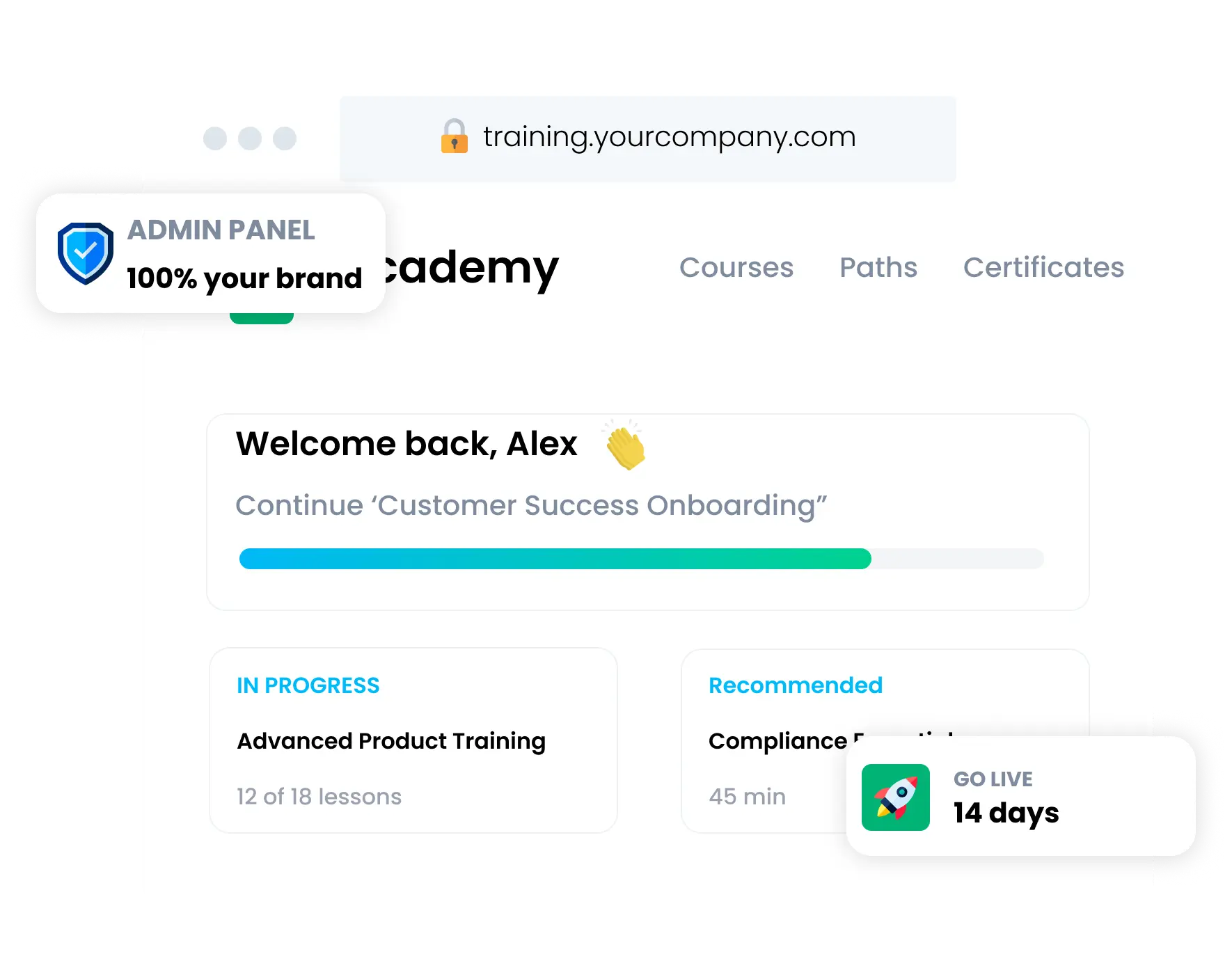
A White-label LMS (Learning Management System) is a powerful, customizable platform that businesses and educational institutions can brand as their own. White-label LMS platforms are pre-built, fully functional systems that can be easily rebranded with a company’s logo, color scheme, and domain. This customization allows businesses to provide a seamless eLearning experience while maintaining their branding and user interface consistency.

Unlike traditional off-the-shelf LMS solutions, which often come with fixed designs and limited flexibility, a white-label LMS enables full control over the appearance and functionality of the platform. This means you can modify the system to meet your organization’s specific needs, whether it’s for employee training, client education, or partner onboarding.

Overall, a White-label eLearning software solution offers a highly adaptable and cost-effective approach for organizations looking to deploy a professional, branded eLearning platform without having to develop one from the ground up.

What Is a Branded LMS?

A Branded LMS is essentially a white-label learning platform customized with your own identity. Using a branded LMS, organizations can deploy training under their logo, color scheme, and domain, so learners feel they’re on an in-house system rather than a vendor’s site.

This seamless branding enhances trust and recognition.

For example, with Paradiso’s white-label LMS, every screen (from login to certificate) can be tailored to your brand, creating a cohesive learning experience without the time and cost of building software from scratch.

Why Choose a Custom LMS Platform?

Many organizations prefer custom LMS platforms because they offer the flexibility to tailor the system to specific business goals and learning needs. While off-the-shelf LMS solutions are great for general use, they can often fall short when it comes to addressing the unique demands of an organization’s learners or training programs.

A custom LMS platform, especially one that is white-labeled, allows you to build a tailored learning experience. You can create specialized training programs, offer different learning paths for various teams or departments, and even integrate the platform with other tools used within your organization. Customization may also include adding or removing specific features such as progress tracking, certifications, or gamification elements, allowing the platform to evolve as your organization’s needs change.

Enterprise features that differentiate leading white-label LMS platforms include:

  • 5000+ pre-built courses covering compliance, ITIL, sales, and soft skills training
  • Built-in course authoring tools for rapid content creation
  • Advanced gamification with points, badges, and leaderboards
  • Social learning features including forums, chat, and polls
  • Blended learning support for online and offline tracking
  • SCORM/AICC/xAPI compliance across all content types

For businesses looking to scale their learning programs, having a custom LMS offers significant long-term value. It ensures that the platform can grow with your organization and adapt to the ever-changing learning landscape.

Key Benefits of White-label eLearning Software

White-label eLearning software is an attractive solution for organizations looking to deploy their learning systems without the need for significant development time or resources. The key benefits include:

Branding Flexibility: The ability to customize the LMS’s design, from colors and logos to the URL, ensures that the platform aligns with your brand’s identity. This enhances the learner’s experience, making it feel more like a part of your organization.

Cost-effective: Instead of building an LMS from the ground up, which can be both costly and time-consuming, white-label eLearning software offers an existing solution that is ready to use. This reduces the overall cost of ownership while still providing a high-quality platform.

Scalable Learning: White-label platforms support growth. As your organization expands, so does your ability to scale the eLearning platform, ensuring that more employees or clients can benefit from the content without performance issues.

Easy Integration: White-label LMS solutions often come with built-in integrations for other software platforms, such as HRMS, CRM systems, or video conferencing tools, making it easier to consolidate your systems and enhance operational efficiency.

Customizable Features: Beyond branding, you can customize features such as course delivery methods (e.g., video, quizzes, live sessions) and reporting tools (e.g., user progress, certificates), ensuring that the LMS meets your exact requirements.

Technical branding features that ensure complete ownership:
Technical branding features ensure full ownership and control over your LMS. Custom CSS enables pixel-perfect brand alignment, while SSL certificates on your domain build trust and security. Branded mobile app listings, removal of vendor references, and custom URLs like yourcompanylms.com create a fully white-labeled experience across all touchpoints.

Advanced enterprise capabilities:
Advanced enterprise capabilities support scalability and performance. Built-in eCommerce allows you to sell courses and certifications, while multi-language support (50+ languages) ensures global reach. Global CDN optimization improves performance worldwide, and executive dashboards provide actionable insights. Automated learning paths further streamline content delivery and learner progression.

User experience advantages:
From a user experience perspective, a branded LMS builds trust and boosts engagement. Familiar interfaces improve usability, reduce support tickets, and create strong first impressions that drive adoption. A consistent experience across desktop and mobile ensures seamless access for all learners.

How Does a White-label LMS Work?

A white-label LMS works by providing a ready-to-deploy system that can be rebranded and customized to match your business’s specific needs. These platforms offer all the core functionalities needed to manage courses, track learner progress, issue certifications, and provide interactive learning experiences.

The process of setting up a white-label LMS typically includes choosing the platform, branding it to your organization’s specifications, and integrating it with your existing tools. Most platforms are designed to be user-friendly and easy to manage, allowing non-technical teams to handle the customization and maintenance.

Once set up, users can access courses, participate in assessments, and track their progress, all within a branded environment that feels familiar and professional. The platform can also be easily updated with new content or features, making it adaptable as your organization’s needs evolve.

White-Label LMS Technical Architecture

Modern white-label platforms utilize a multi-layer customization approach:

  • Frontend Layer: Logo, themes, colors, fonts, layouts, custom favicon, progress bars, loading screens
  • Backend Layer: Custom domains, SSO configurations (SAML2, LDAP, OAuth), API endpoints, webhooks
  • Content Layer: Branded certificates, emails, notifications, progress bars, 404/error pages, user profile pages
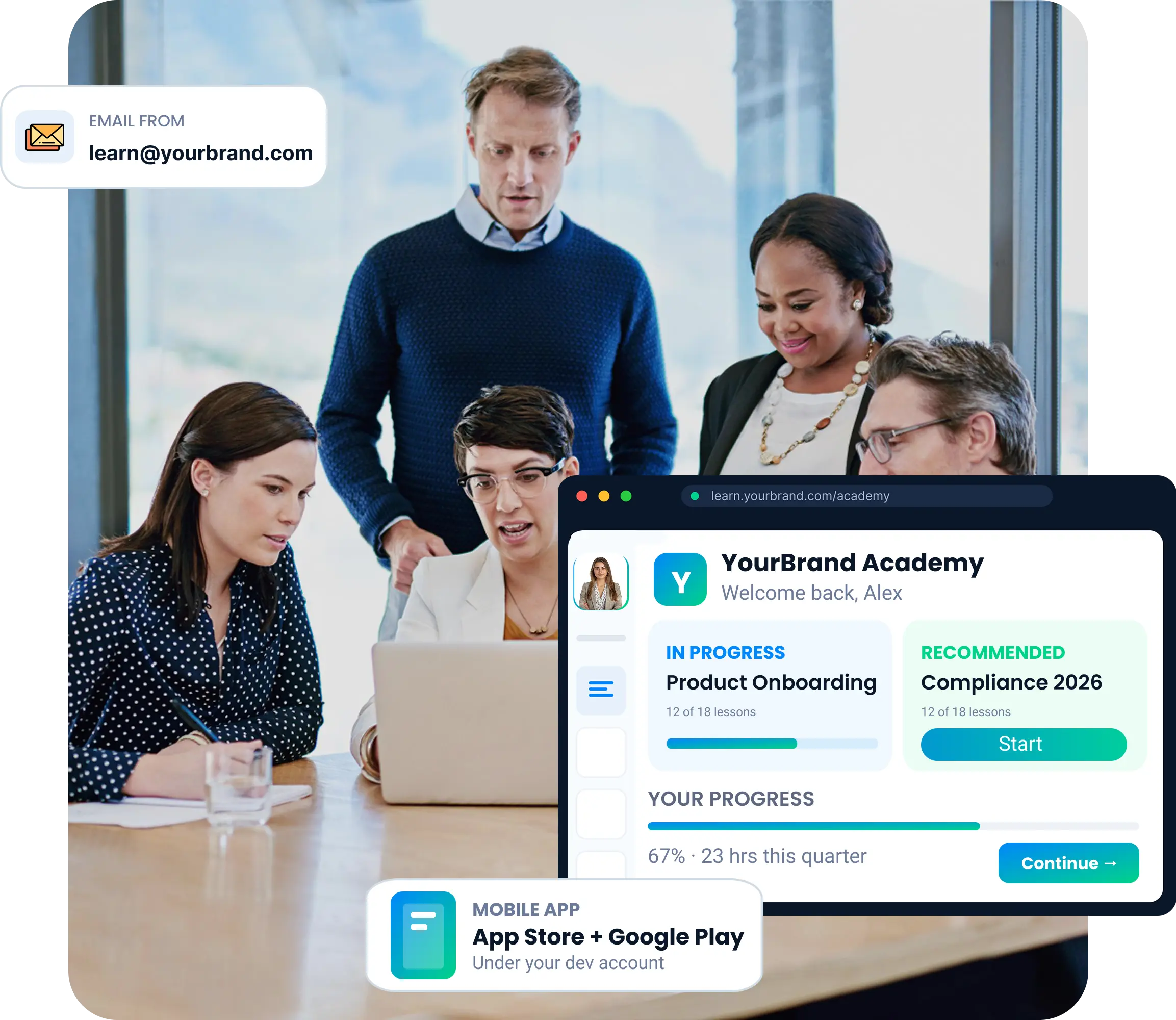
  • Mobile Layer: White-labeled iOS/Android applications, branded app store listings

This architecture ensures complete brand control across every user touchpoint while maintaining enterprise-grade performance and security.

Rebranding and Customization: A Deep Dive

Rebranding and customizing your white-label LMS is one of the key features that differentiate it from standard off-the-shelf solutions. With a white-label system, you have the flexibility to make significant design changes to suit your brand’s identity.

You can modify the user interface (UI) with your company logo, colors, and fonts to create a cohesive look that matches your other digital assets. Custom URLs and domain names can also be used, making the platform feel like it’s part of your website rather than an external solution.

Advanced UI customization elements include:

  • Custom favicon and browser tab icons
  • White-labeled progress bars and loading screens
  • Branded 404/error pages
  • Customizable user profile pages
  • White-labeled file upload interfaces
  • Branded gamification elements (badges, leaderboards)

Comprehensive customization typically includes:

  • Company logo, favicon, and complete color schemes
  • Custom login pages, dashboards, and navigation menus
  • Branded email notifications and automated communications
  • Personalized certificates and achievement badges
  • Custom domain names for seamless branding
  • Mobile-responsive themes across all devices

Technical customization depth:

  • Custom SSO configurations (SAML2, LDAP, OAuth)
  • Branded API endpoints and developer webhooks
  • White-labeled REST APIs for custom integrations
  • Custom user registration workflows
  • Personalized onboarding experiences
  • Branded assessment delivery interfaces

Modern white-label platforms provide intuitive no-code tools:

  • Drag-and-drop theme editors for instant visual changes
  • Professional template libraries for rapid deployment
  • Real-time preview functionality during customization
  • One-click deployment across all environments

Branding made enjoyable:

  • Intuitive visual editors requiring no CSS/HTML knowledge
  • 50+ professional starter templates
  • Real-time preview eliminates iteration delays
  • Non-technical administrators fully empowered

Customization doesn’t end with design. You can also adjust the platform’s functionality to align with your unique training requirements. Whether it’s adding new learning modules, changing the course delivery method, or incorporating compliance tracking, a white-label LMS gives you the freedom to adapt the system as your needs evolve.

Why Do You Need a White-label LMS?

1. Deliver Consistent Learning Experiences

A white-label LMS ensures that your learning platform offers a consistent, cohesive experience to users. From branding to content presentation, it reinforces your organizational identity and makes learning feel like an integral part of your culture.

2. Maintain Brand Integrity

For businesses, maintaining brand integrity across all digital platforms is crucial. A white-label LMS allows you to ensure that your eLearning environment matches your company’s digital presence. This not only increases brand visibility but also boosts engagement and retention rates among learners.

3. Enterprise Scalability & Future-Proofing

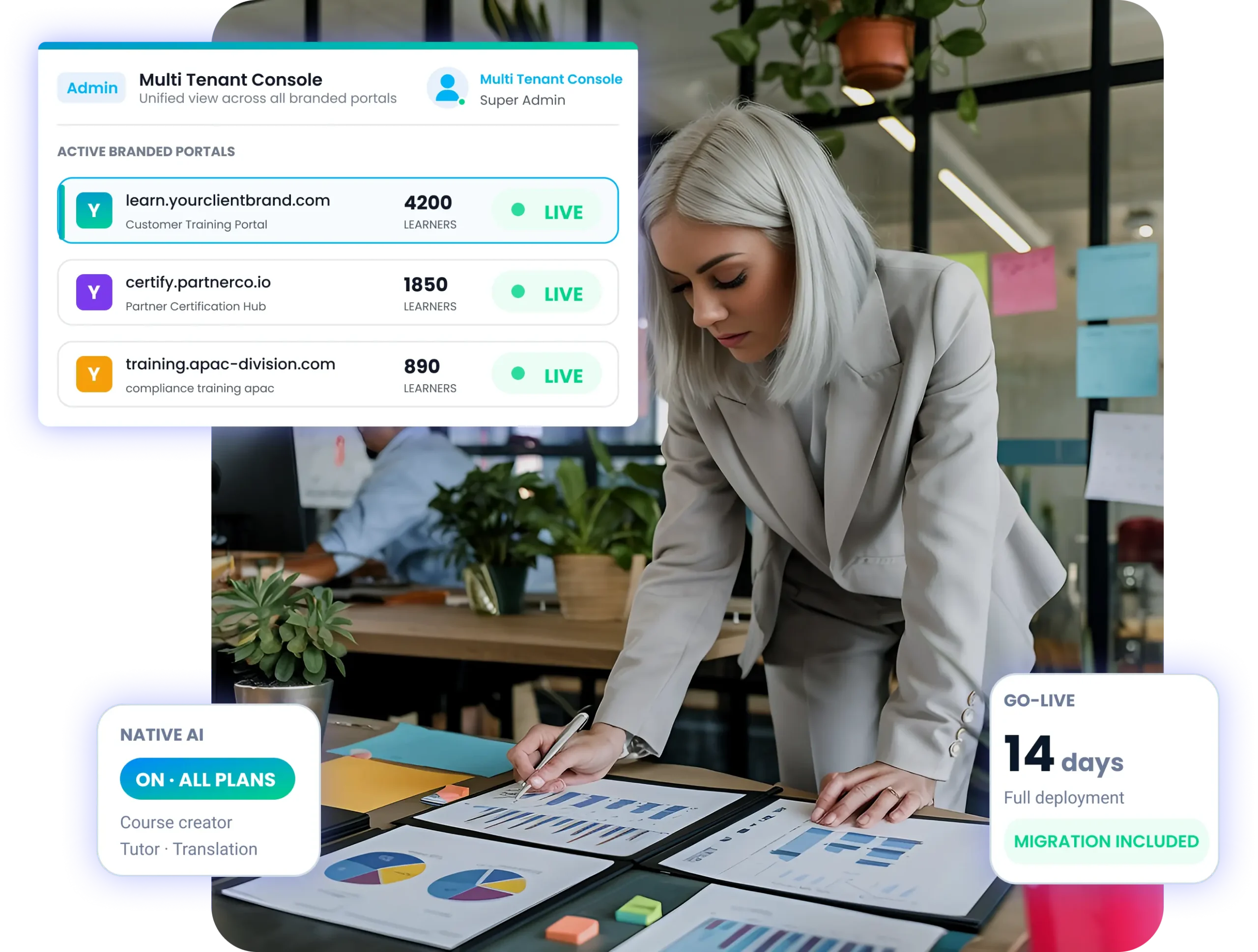
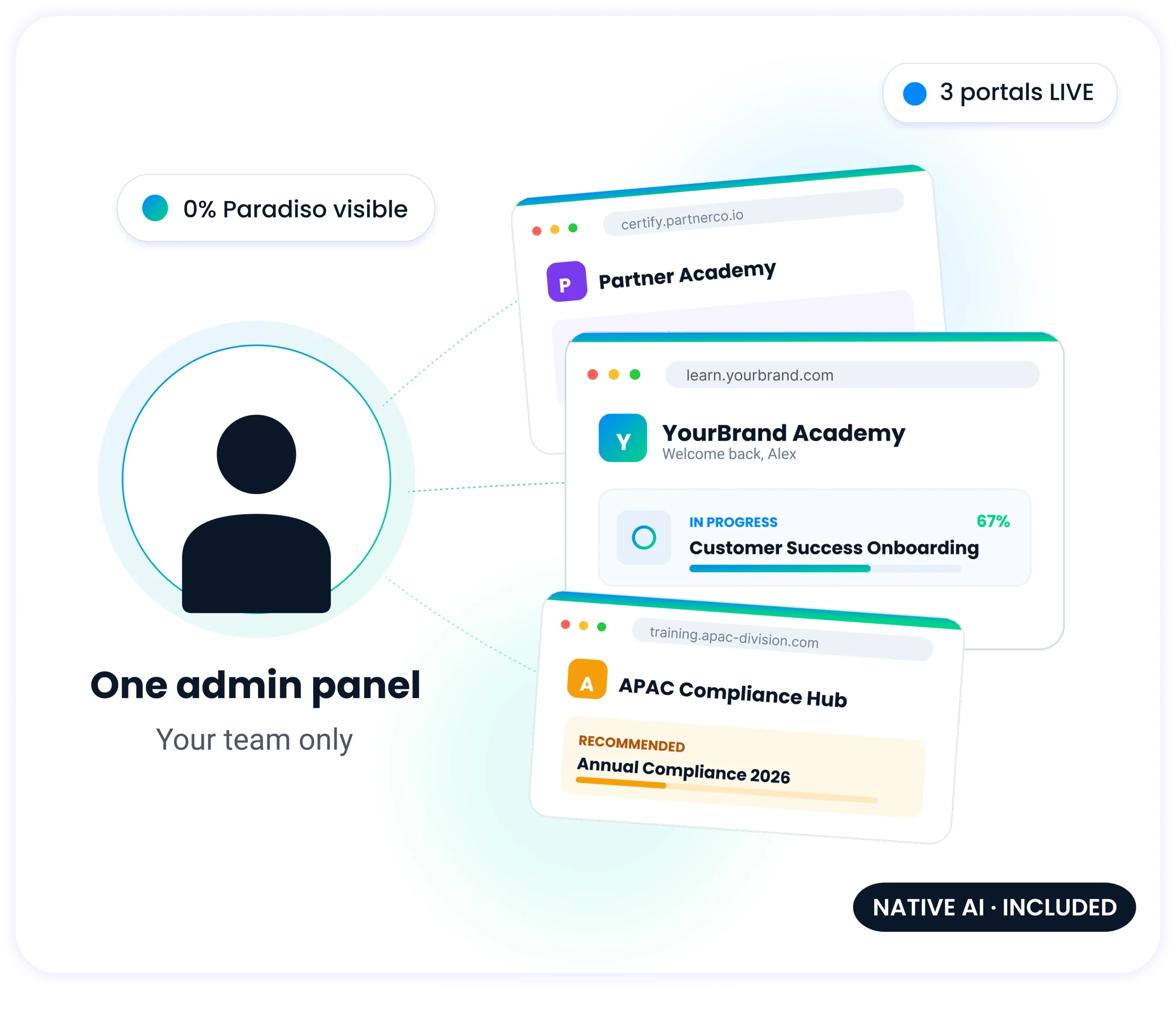
  • Unlimited multi-tenant portal deployment – Scale across departments, clients, franchises
  • Global CDN delivery – Worldwide performance optimization
  • Native mobile app white-labeling (iOS/Android) – Complete branded experience
  • Continuous platform updates – New features without rebranding
  • Future-ready architecture – AI, VR integration capabilities

The Enjoyable Branding Process

Why teams love white-label customization:

Key Benefits:

  • Creative Freedom: Marketing teams design without developer dependency
  • Speed: Fully branded platform live in maximum 3 weeks
  • Confidence: Professional results guaranteed every time

Process Advantages:

  • Collaboration: Real-time previews accelerate stakeholder approval
  • Scalability: Easy portal duplication for new departments/clients

White-label LMS vs. Off-the-shelf Solutions: What’s the Difference?

While off-the-shelf LMS platforms are quick to implement and usually come with pre-set features, they often don’t offer the level of customization or flexibility required by many businesses. With white-label LMS solutions, organizations have the power to rebrand the system entirely, ensuring that the learning environment feels like their own.

Off-the-shelf LMS options are generally more affordable but may not include essential features like integrations with existing business systems or advanced customization capabilities. On the other hand, a white-label LMS offers more room for growth, advanced analytics, and support, making it a more future-proof solution for businesses looking to scale their learning programs.

Revenue Potential of a Branded LMS

A white-label LMS unlocks new monetization channels beyond internal training. Common revenue models include:

  • Subscription Plans: Offer tiered packages (Basic, Premium, etc.) based on features or seats, generating recurring income.
  • Course Sales & Bundles: Sell individual courses or bundled learning paths for one-time fees to external customers.
  • Licensing: License proprietary course libraries or LMS sites to partners, franchises, or other businesses.
  • Service Upsells: Charge for consulting, custom content development, certifications, or premium support around your LMS.
  • Industry Solutions: Develop vertical-specific training programs (e.g. healthcare compliance, retail onboarding) that command higher prices.

By leveraging these models, organizations turn their branded LMS into a revenue engine.

For instance, Paradiso clients often expand from free internal use into paid client academies and certification programs, diversifying income.

Features That Drive Revenue

Certain LMS features directly support monetization:

  • Deep Branding & Customization: A fully branded interface justifies premium pricing and builds learner trust.
  • E-commerce and Payment Gateway: Built-in checkout and payment options streamline course sales, subscriptions, and renewals.
  • CRM/ERP Integration: Syncing with CRM or ERP systems automates user management and lets you leverage customer data for upsells.
  • Gamification & Certification: Points, badges, and certificates increase engagement and customer retention. Offering official certifications allows charging renewal fees.
  • Advanced Analytics: In-depth reports on enrollments, completion rates, and user behavior highlight high-demand courses and cross-selling opportunities.
  • Mobile Learning & Microlearning: Mobile apps and short, on-the-go modules increase usage. Micro-courses (skill packs) meet busy learners’ needs and can be sold separately.

These capabilities ensure a branded LMS is not just a content portal but a versatile platform for profitable learning products.

Monetization Best Practices

To maximize LMS revenue, use proven strategies:

  • Tiered Pricing: Offer multiple subscription levels aligned with feature sets or support tiers. This captures both budget-conscious and high-value clients.
  • Value-Added Features: Differentiate higher tiers with exclusive features (e.g. AI-based personalization, advanced analytics, custom integrations). Premium content and custom modules can command extra fees.
  • Partnerships & Affiliates: Collaborate with industry partners or resellers. For example, a certification body might market your LMS to its members, sharing revenue.
  • Free Trials & Freemium: Offer trial access or basic content for free to attract users, then convert them to paid plans with gated advanced courses.
  • Continuous Improvement: Update content regularly and use learner feedback to refine offerings. Engaged users are likelier to upgrade or renew.

By blending flexible pricing with compelling features and alliances, organizations transform their branded LMS into a self-sustaining revenue generator.

Industry Use Case: Retail Training

Retail is an excellent example of how a branded LMS can boost both performance and revenue. Traditional retail training (classrooms, manuals) often lacks consistency across stores. By contrast, retail chains use white-label LMS platforms to deliver uniform training under their brand – covering product knowledge, promotions, and customer service – to every store and employee.

Mobile-friendly, bite-sized modules let sales associates learn on the job, improving knowledge retention and customer satisfaction.

Lessons for Other Industries

The retail scenario scales to any sector:

  • Enhanced Engagement: Branded, gamified content motivates learners everywhere – from hospitality staff to field technicians.
  • Faster Onboarding: Role-specific learning paths speed new-hire productivity in high-turnover fields (e.g. healthcare, manufacturing) just as in retail.
  • Consistent Compliance: Centralized tracking ensures policies and regulations are uniformly taught and enforced across locations (retail stores, clinics, or factories).
  • Omnichannel Readiness: Similar to omnichannel retail, other industries (finance, education) can deliver unified learning experiences across in-person, online and mobile channels.
  • Scalable Growth: As organizations expand (new stores, branches, franchise units), a white-label LMS ensures training scales cost-effectively.

In short, what retail achieves with a branded LMS – higher completion rates, faster “speed-to-floor,” and stronger brand messaging – can be replicated in any industry (healthcare, education, corporate training, etc.) by using a similar strategy.

Industry Examples & Success Stories

  • Corporate Training Firms: Selling branded LMS-based academies (subscription or one-time) to multiple enterprise clients, creating a new revenue stream.
  • Universities & Institutes: Delivering online degrees and certificate programs under their own brand to global learners.
  • Professional Associations & Healthcare: Offering continuing education (CE/CME) courses through a branded portal and monetizing access.
  • Franchises & Retail Chains: As above, using the LMS to maintain consistency across locations, reducing onboarding time and compliance issues.

These examples show how Paradiso’s white-label LMS helps organizations expand reach, increase user “stickiness,” and monetize training in diverse sectors.

Future Trends for Branded LMS

Branded LMS platforms must evolve with learning-tech trends:

Mobile-First Learning: With smartphones ubiquitous, a top-tier LMS must have responsive design and native apps. This allows employees (e.g. retail staff) to access training anywhere, anytime, increasing adoption.

Microlearning: Delivering very short, focused lessons lets organizations push rapid updates (new product info, safety updates) with minimal workflow disruption. These micro-courses can also be packaged as premium content.

AI-Driven Personalization: Artificial intelligence will tailor learning paths to individual roles and behaviors. For example, the system can recommend next modules based on a user’s performance or career goals, boosting effectiveness.

Advanced Analytics & Reporting: Next-gen LMS dashboards will offer predictive analytics – helping admins forecast skill gaps and measure training ROI. This data-driven insight makes the LMS a strategic tool for planning and marketing (e.g. identifying which courses to promote or retire).

Staying ahead on these fronts ensures a branded LMS remains engaging and valuable, solidifying it as a core part of the organization’s growth strategy.

How Paradiso LMS Simplifies Revenue

Paradiso LMS itself embodies these monetization principles. It offers fast setup (custom branding, domain, and initial content can be configured in days) to accelerate time‑to‑revenue.

It provides robust integrations – connecting easily with popular CRM, HRMS, ERP, e‑commerce, and POS systems – so all learner and sales data flow seamlessly.

Paradiso also supports microlearning on mobile out of the box, making training accessible to frontline teams.

Its advanced analytics dashboards (enrollments, completions, engagement) help administrators refine offerings and pricing for maximum profit.

By combining deep white‑label branding with built‑in e‑commerce and reporting tools, Paradiso LMS gives organizations the technical foundation to transform training into a scalable revenue stream.

Conclusion

A white-label LMS is more than just a training platform, it’s a strategic tool for branding, scalability, and growth. By combining customization, seamless integrations, and monetization strategies, organizations can deliver impactful learning experiences while strengthening their brand identity and unlocking new revenue streams. When implemented effectively, a white-label LMS evolves into a long-term competitive advantage that supports both business expansion and continuous learning.

Frequently Asked Questions (FAQ)

1. What is the difference between a white-label LMS and a custom-built LMS?

A white-label LMS is a pre-built platform that can be rebranded and customized to fit your organization’s needs. It allows for fast deployment with branding flexibility. A custom-built LMS, on the other hand, is created from scratch and offers more flexibility in terms of functionality but typically takes longer and costs more to develop.

2. Can I integrate a white-label LMS with other tools?

Yes, most white-label LMS platforms come with built-in integration capabilities for CRM systems, HRMS, video conferencing tools, and more. This makes it easier to centralize your organizational processes and enhance operational efficiency.

3. Is a white-label LMS scalable?

Yes, white-label LMS solutions are highly scalable. They can accommodate growing user bases, new content, and changing features, ensuring that your eLearning programs can grow along with your business.

4. How customizable is a white-label LMS?

White-label LMS platforms offer extensive customization options. You can modify the branding, design, user interface, and even add specific features like gamification, compliance tracking, or analytics tailored to your business needs.

Let AI create your training courses

Type a course idea like GDPR

Follow us!

Do NOT follow this link or you will be banned from the site!