
Creating and selling an online course means turning your expertise into a structured learning experience that people can buy, complete, and apply. The work goes beyond recording a few videos. You need a clear audience, a course topic with demand, a useful curriculum, a sales process, and a platform that can deliver learning and accept payments.
This guide explains how to create an online course, price it, market it, and sell it through a branded learning experience. It is written for training companies, subject matter experts, professional educators, membership organizations, and businesses that want to train customers, partners, or employees.
Paradiso LMS can support the full process with course delivery, learner management, branded portals, ecommerce capabilities, reporting, and integrations. Start with the eight steps below, then use the platform checklist to decide what you need.
Wish to watch a video instead? Discover easy-to-follow ways to sell online courses by watching our video tutorial.
Before you dive into the world of online course creation, it’s crucial to grasp the essentials of crafting engaging and appealing content that resonates with your target audience.
This foundational knowledge is vital for anyone looking to successfully create and sell courses online, as it guides the development of engaging, informative, and valuable learning experiences tailored to the needs and interests of learners.
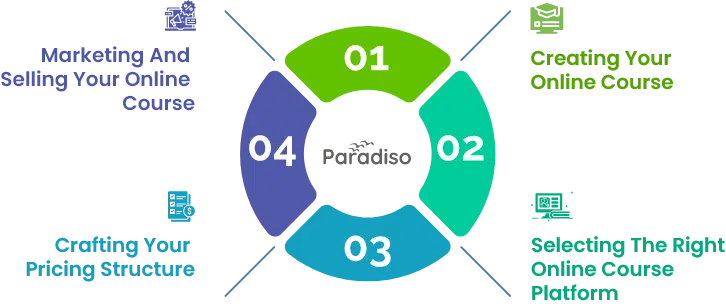
Begin with a problem that a defined group of learners wants to solve. A strong course topic sits where your knowledge, your audience needs, and a practical outcome overlap. For example, a compliance consultant might teach managers how to prepare for an audit. A product expert might teach customers how to use a new workflow.
Avoid starting with a broad subject such as leadership or marketing. Narrow the idea by audience, experience level, role, or result. The clearer the outcome, the easier it is to write the course, market it, and explain its value.
Test demand before you invest in full production. Talk to potential learners, review recurring questions from sales and support teams, study the language used in search queries, and look for gaps in existing courses. You can also run a webinar, offer a short pilot module, create a waitlist, or pre-sell the program.
Validation does not require a large research project. It should answer three questions: who will buy the course, what problem do they need to solve, and why would they choose this course instead of free information or another provider.
Write the outcome before you write the lessons. A good outcome describes what learners can do after the course, not simply what they will read or watch. For example, replace “understand cybersecurity awareness” with “identify common phishing attempts and report them using the company process.”
Clear outcomes improve course design and sales conversion. Learners can see the value of enrolling, while instructional designers can choose the right lessons, practice activities, assessments, and completion criteria.
Organize the course into short modules that move from foundations to application. Each module should have one clear purpose and should give learners a reason to continue. Combine the right formats for the subject: video for demonstration, text for reference, quizzes for knowledge checks, downloadable tools for job support, and live sessions for coaching or discussion.
For professional training, include practice that reflects the learner’s real work. Scenario questions, role plays, case studies, simulations, and assignments usually create more value than passive content alone.
Your platform should make it easy to publish content, enroll learners, manage access, accept payments, and measure results. A marketplace can provide built-in exposure, but it may limit your pricing, branding, learner data, and customer relationship. A branded LMS gives you more control when the course is part of a larger training business, certification program, customer academy, or partner enablement program.
Before selecting a platform, list the capabilities you need on day one and the capabilities you expect to need as the business grows. This prevents a costly migration after the course gains traction.
Price the course based on the outcome, audience, support level, content depth, and alternatives available to the buyer. A practical beginner course may use a one-time payment. A continuously updated professional program may work better as a subscription. Businesses selling to teams may need volume pricing, bundles, invoices, or private cohorts.
Make the offer easy to understand. State what the learner receives, how long access lasts, whether certificates are included, and what support is available. If you offer a free preview or a short introductory lesson, make sure it demonstrates the quality and relevance of the full course.
A sales page should help a buyer decide quickly. Start with the course outcome and intended audience. Then show the curriculum, lesson format, expected time commitment, instructor credibility, proof of value, price, and enrollment process. Include a clear call to action throughout the page, not only at the end.
Business buyers often need more information than individual learners. Add details about reporting, branding, integrations, security, implementation, and support when you are selling training at scale.
Use the channels where your audience already learns and makes decisions. These may include email, webinars, search content, professional communities, partnerships, sales outreach, paid campaigns, and existing customer communications. Match the message to the buyer stage. A new prospect may need a useful guide or webinar, while someone who viewed the course page may need curriculum details or a demonstration.
After launch, track enrollments, conversion rate, learner progress, completion, assessment performance, refund requests, support questions, and revenue. Use these signals to improve both the course experience and the sales process.
By following these steps, you’ll be well-equipped to create, market, and sell your online courses successfully using Paradiso LMS. Get ready to share your knowledge and skills with a global audience and watch your online course business thrive!
The right online course platform depends on who you serve and how you plan to sell. Independent creators may prioritize ease of setup. Training companies may need branded storefronts and recurring revenue tools. Enterprise teams may need reporting, integrations, role-based administration, and support for customer, partner, or employee learning.
Use this checklist when evaluating a platform.
| Capability | Why it matters when selling courses |
|---|---|
| Course creation and delivery | You need to organize lessons, upload content, create assessments, and control learner access. |
| Branded learner experience | Your course portal and checkout should reflect your organization rather than a third-party marketplace. |
| Ecommerce and payments | The platform should support the payment process, discounts, enrollments, and the payment options your buyers expect. |
| Marketing and integrations | Connections to CRM, email, analytics, webinar, and website tools reduce manual work and support follow-up. |
| Reporting and learner data | You need to understand enrollments, progress, completion, engagement, and course performance. |
| Scalability and support | The platform should support more courses, learners, administrators, and business requirements without forcing a rebuild. |
There is no universal course price. Start with the value of the outcome and the buyer’s willingness to pay. A course that helps a professional earn a certification, meet a regulatory requirement, reduce risk, or improve job performance can justify a different price than a general-interest course.
Common models include a one-time purchase, subscription access, bundled courses, team licenses, cohort pricing, and private training packages. Choose one model that is easy to explain, then add complexity only when there is a real buyer need.
AI can help course teams work faster when it supports a well-defined instructional process. Use it to generate a first outline, draft knowledge-check questions, create lesson summaries, adapt content for different audiences, or translate approved material.
A subject matter expert and instructional designer should still review the final course for accuracy, relevance, accessibility, and tone.

Here’s a table comparing the top online course platforms based on their standout features, best use cases, and pricing
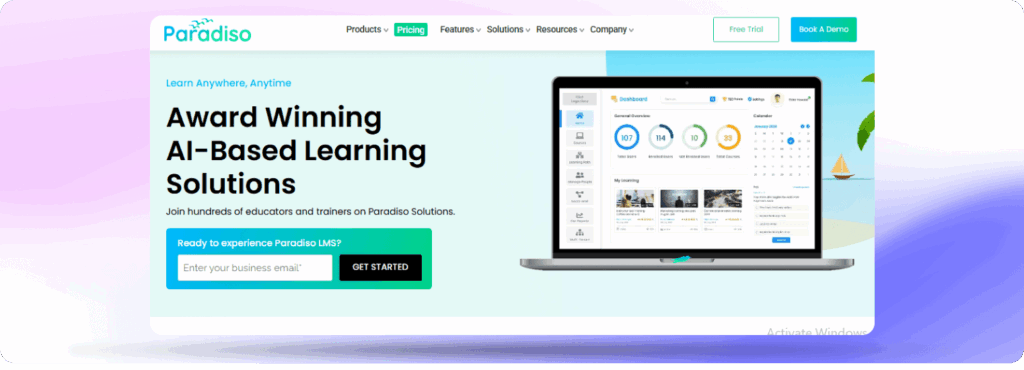
Paradiso Solutions is a renowned provider of Learning Management Systems (LMS), and their Paradiso LMS is a standout platform in the eLearning landscape. What sets it apart is its blend of traditional learning management with cutting-edge eLearning tools, making it a robust choice for educators and businesses alike.
Paradiso LMS goes beyond basic course creation and selling; it offers an integrated eCommerce platform, making it convenient to monetize your courses. The platform also features gamification, enabling you to create engaging learning experiences. Social learning and virtual classrooms further enhance interaction among learners.
Customizable branding ensures your courses reflect your unique identity, and in-depth analytics help you track learner progress. Mobile compatibility means your courses can be accessed on various devices, and a wide range of integrations with third-party tools ensures flexibility. Paradiso LMS is the ideal platform for creating, marketing, and selling online courses with flair.
Skillshare, founded in 2010, is an online learning community that shines a spotlight on real-world skills, primarily in the creative industry. If you’re passionate about subjects like design, photography, video, freelancing, and more, Skillshare is your gateway to honing your expertise and creativity.
The platform encourages hands-on learning through project-based courses, ensuring active participation and real-world application of skills. Skillshare operates on a subscription model, providing unlimited access to a vast library of courses.
What truly sets Skillshare apart is its vibrant community, fostering networking opportunities and feedback exchange among learners and creators. Whether you’re a course creator or a learner, Skillshare offers a dynamic and interactive environment to fuel your creative aspirations.
Teachable, established in 2014, is an online platform that empowers individuals and businesses to create and sell their online courses.
Whether you’re an entrepreneur, an expert in your field, or an educator, Teachable provides the tools and technology to bring your courses to life. It stands out with its extensive course creation features that allow for content customization, ensuring your courses align with your vision. Robust sales and marketing tools make promoting your courses a breeze, while detailed analytics provide insights into student progress.
Teachable offers flexible pricing options, a user-friendly interface, and a supportive community. Whether you’re looking to craft, market, or sell courses, or you’re a student seeking diverse educational content, Teachable is an excellent choice.
Podia, launched in 2014, is an all-in-one digital marketplace that caters to creators looking to sell online courses, memberships, and digital products. It’s designed to provide a seamless experience for selling and managing digital content.
What sets Podia apart is its commitment to simplicity, eliminating technical complexities and allowing creators to focus on their craft. The platform offers an intuitive, no-code course builder that simplifies the content creation process. Integrated email marketing tools help you connect with your audience effectively.
Podia’s options for creating membership sites and providing direct messaging for customer engagement make it a comprehensive platform for monetizing your skills and passions online. With instant payouts and zero transaction fees, you can focus on what you do best: creating and selling your work.
Memberful is a specialized platform designed to help creators, publishers, and entrepreneurs monetize their audience through memberships. Launched in 2013, it excels in simplifying the process of offering subscriptions and memberships.
Memberful integrates seamlessly with your existing websites, blogs, or content, allowing you to add membership options without disrupting your current workflow or brand. It offers straightforward subscription and membership tools with diverse payment options, ensuring a hassle-free checkout experience for your audience.
Memberful emphasizes data security and privacy, provides comprehensive analytics, and allows for custom branding. With its supportive customer service and user-friendly approach, it’s an ideal solution for creators aiming to establish a sustainable income through memberships.
Founded in 2010, Udemy is a massive open online course (MOOC) provider that offers an extensive range of courses in various subjects. With a mission to improve lives through learning, Udemy caters to millions of students worldwide and enables instructors from diverse fields to create and sell online courses.
What makes Udemy stand out is its vast and diverse library, boasting over 100,000 courses in 65+ languages. Learners enjoy lifetime access to course materials, and instructors benefit from robust tools like video uploads and interactive exercises.
Udemy also features frequent promotions, ensuring affordable access to a wide range of courses. A user-friendly interface, course rating system, and community Q&A sections enhance the learning and teaching experience, making Udemy a favored platform for both learners and instructors globally.
Thinkific, established in 2012, is a comprehensive online course platform designed for educators, entrepreneurs, and businesses. Its mission is to provide creators with the tools they need to craft engaging courses and build successful online education businesses.
Thinkific’s user-friendly course builder supports multimedia-rich content, extensive customization options, and various marketing and sales tools, including coupons and memberships. Creators benefit from instant access to funds without transaction fees, integrated payment processing, and detailed student analytics.
The platform also offers options for private courses and emphasizes strong customer support. Whether you’re an educator or an entrepreneur looking to create and sell online courses, Thinkific provides the resources you need to thrive in the digital education landscape.
Launched in 2010, Kajabi is a robust all-in-one platform tailored for entrepreneurs and businesses seeking to create, market, and sell online courses, memberships, and digital products.
Kajabi stands out for its comprehensive approach, offering an extensive suite of features that simplify the entire process. Course creators benefit from advanced tools for course creation, including multimedia support, customizable website building, and automated marketing campaigns. The platform facilitates sales funnels, landing pages, and integrated payment processing, ensuring a seamless user experience.
Kajabi also provides one-click upsells, detailed analytics, and options for subscriptions and memberships. With its intuitive interface and 24/7 customer support, Kajabi streamlines the process of creating, marketing, and selling online content, all within one comprehensive platform.
Mighty Networks, founded in 2017, is a unique platform that allows creators, brands, and businesses to build interactive communities around specific interests or niches. It goes beyond merely creating and selling online courses; it’s a space where users can foster engagement and interaction among members.
Mighty Networks is particularly popular among entrepreneurs, content creators, and anyone looking to create a vibrant, interactive community around their brand or niche. The platform offers a suite of features designed to build and manage these online communities, including branded mobile apps and websites, online course hosting, membership programs, event organization, and rich discussion forums.
Mighty Networks supports direct messaging, subgroup creation, and provides tools for content organization, member management, and analytics to facilitate engagement and growth. It’s an all-in-one platform tailored for creators and entrepreneurs aiming to foster interactive, loyal communities around their brand or niche.
Paradiso LMS gives training providers and organizations a place to create, manage, and sell learning experiences under their own brand. You can build a course catalog, manage learner access, deliver courses across devices, and connect course delivery with the tools used to market and support customers.
For course businesses that need more than a simple checkout page, Paradiso can support a branded learning environment with ecommerce capabilities, reporting, integrations, and administration for growing audiences. This makes it suitable for organizations selling professional education, customer training, partner training, certification programs, and internal learning products.
Book a personalized demo to see how Paradiso LMS can support your course model, learner experience, and commercial requirements.
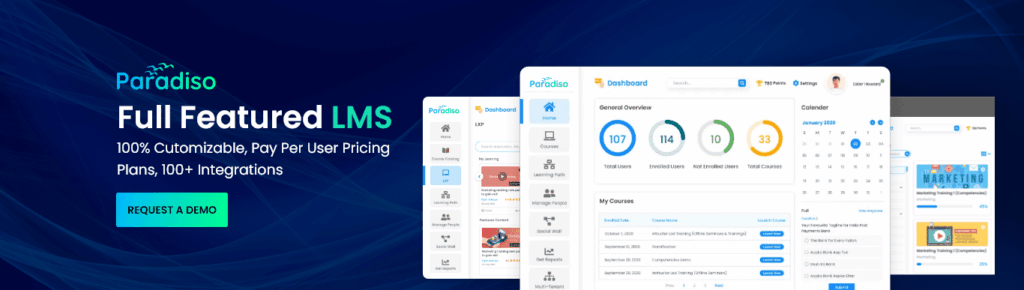
To explore Paradiso LMS in more detail, you can easily schedule a personalized demo. Our team will walk you through the platform’s features, customization options, and integration capabilities to help you understand how Paradiso LMS can meet your specific organizational needs. Simply visit our website and click on “Schedule a Demo,” or contact us directly to set up a time that works best for you.

A scalable, AI-powered learning platform with advanced analytics and mobile access—built to drive performance across your organization.

Rapidly create professional, interactive courses with AI-driven course-building tools tailored for business training.

Practice real-world scenarios with AI-powered simulations to build skills, improve performance, and prepare every team for confident, high-impact conversations.
Solutions
Industry
Our website uses cookies to ensure it functions properly and provides a safer experience. Some cookies are necessary for the website to operate. By clicking 'Accept,' you agree to the use of cookies as outlined in our Privacy Policy. If you click 'Decline,' only essential cookies will be used.