
Introduction: Embracing Innovation in Workplace Learning
In today’s rapidly evolving business environment, organizations must continuously update their training strategies to remain competitive and develop a resilient, skilled workforce. Traditional training methods, which once sufficed, are now often inadequate for addressing the diverse learning needs of modern employees. As a result, embracing innovative approaches to workplace learning has become essential.
Innovative training techniques, such as blended learning, combining in-person instruction with digital education are transforming talent development across industries, especially when supported by a modern blended learning LMS that enables seamless delivery and tracking. Blended learning offers greater flexibility, scalability, and personalized experiences, making learning more engaging and accessible for employees regardless of role or location.
By integrating cutting-edge technologies and pedagogical practices, organizations can cultivate dynamic learning environments aligned with their strategic objectives. Staying ahead in workforce development requires not only adopting innovative methods but also fostering a culture of continuous learning and adaptation. Ultimately, embracing such innovations enhances productivity, boosts employee satisfaction, and promotes organizational agility amid intense competition.

What Is the Blended Learning Approach? Key Concepts & Models
Blended learning is an innovative educational strategy that combines the strongest elements of traditional classroom teaching with modern online learning tools. This approach aims to deliver flexible, personalized, and more effective learning experiences by integrating various instructional methods and technologies, forming the foundation of effective blended learning strategies in modern organizations.
Defining Blended Learning
Also known as hybrid learning, blended learning seamlessly merges instructor-led sessions with digital content and virtual interactions. It enables learners to access educational resources whenever and wherever they choose, fostering greater autonomy and engagement. According to the U.S. Department of Education (2010), blended learning “leverages technology to connect students and instructors in new and flexible ways,” enhancing learning outcomes and operational efficiency.
Key Concepts of Blended Learning
- Flexibility and Personalization: Customizing learning paths to suit individual needs allows learners to control their pace, revisit modules, and select preferred environments, thereby increasing motivation and retention.
- Integration of Technologies: Digital tools such as Learning Management Systems (LMS), multimedia content, and interactive simulations support understanding and engagement through diverse formats.
- Data-Driven Insights: Learner interactions within online components generate valuable data that educators can analyze to identify gaps, tailor instruction, and enhance program effectiveness.
Common Blended Learning Models
Understanding the different models of blended learning aids in designing tailored training programs aligned with organizational goals and learner preferences, with each approach serving as practical blended learning examples in real-world training environments.
- Rotation Model: Learners rotate between online modules, group discussions, and hands-on activities within a scheduled framework. Variants include station rotation and flipped classrooms, emphasizing active participation and collaboration.
- Flex Model: Most content is delivered online, with instructors providing support and facilitating discussions as needed. Learners have significant control over their pace and learning pathways.
- A La Carte Model: Learners choose between online courses and traditional classroom sessions, providing tailored and flexible learning options, often used in higher education or professional development.
- Enriched Virtual Model: Learners primarily engage with online content independently but attend periodic face-to-face sessions for reinforcement, assessments, or practical activities.
Differences From Traditional Training
Unlike solely instructor-led training reliant on in-person lectures, blended learning integrates technology to increase accessibility and interactivity. It also offers more personal connection than fully online courses by incorporating face-to-face interactions. This hybrid approach addresses diverse learning styles and adapts to the evolving needs of corporate education and training.
By combining multiple instructional methods and technological innovations, blended learning provides a comprehensive way to boost learner engagement and performance. Understanding its core concepts and models enables organizations to design effective, scalable, and learner-centered training solutions.
Why The Blended Learning Approach Works: Benefits for Organizations & Employees
Blended learning, which combines traditional instructor-led training with online digital content, has become widely popular in corporate environments for its proven effectiveness. This approach leverages the strengths of both methods to create engaging, flexible, and efficient learning experiences that benefit organizations and employees alike.
Enhanced Engagement and Motivation
One significant advantage of blended learning is its ability to increase learner engagement. Interactive online modules, videos, quizzes, and in-person sessions make training more stimulating and relevant. According to the Association for Talent Development (ATD), employees participating in blended programs demonstrate 20-30% higher engagement levels compared to traditional training. Engaged employees tend to be more motivated, leading to greater productivity and job satisfaction.
Flexibility and Accessibility
Blended learning offers unprecedented flexibility—employees can access training materials anytime and from any location. This is especially important in today’s remote and hybrid work settings. Learners can schedule their studies around work commitments, reducing the need for time-consuming in-person sessions. A survey by Brandon Hall Group reports that 70% of organizations saw increased participation after adopting blended learning due to its convenience and adaptability.
Improved Knowledge Retention and Practical Application
Research shows that blended learning enhances retention by combining multiple learning modalities suited to various styles. The National Education Association emphasizes that active participation, such as discussions and hands-on tasks, strengthens understanding and long-term memory. Additionally, digital content allows learners to revisit materials, supporting ongoing application and performance improvement on the job.
Cost Savings for Organizations
Compared to traditional face-to-face training, blended learning can be more cost-effective. It reduces expenses related to travel, venue rentals, and printed materials. Digital modules can be easily updated and reused, keeping content current without high additional costs. For large or geographically dispersed teams, blended learning provides a scalable solution that optimizes training budgets.
Promoting a Culture of Continuous Learning
This approach fosters ongoing development by integrating learning into daily workflows. Employees can pursue self-paced study alongside instructor-led sessions, nurturing a mindset of continuous improvement. Such a culture leads to a more adaptable, skilled workforce capable of evolving with industry trends.
Better Measurement and Feedback Loop
Digital elements facilitate real-time tracking of learner progress via analytics and assessments. This data-driven approach allows organizations to swiftly identify knowledge gaps and customize future training efforts. Improved measurement aligns training outcomes with organizational goals.
In summary, blended learning offers a compelling combination of increased engagement, flexibility, enhanced retention, cost-efficiency, and ongoing development opportunities. For organizations aiming to strengthen employee skills while controlling costs, adopting blended strategies ensures a more effective, adaptable workforce. Platforms like Paradiso LMS can help organizations leverage these benefits to create impactful training programs.
Implementing Blended Learning Effectively: Strategies and Best Practices
Blended learning has revolutionized corporate training by combining traditional classroom instruction with digital methods. This approach provides flexibility, engagement, and personalized experiences that are well-suited for modern workforce development. To unlock its full potential, organizations should strategically plan, develop, and deliver blended learning programs aligned with their goals and learner needs. Here are proven strategies and best practices based on industry standards and research to ensure success and sustainability.
Designing a Strong Blended Learning Framework
Assess Needs and Set Clear Objectives
Begin with a thorough needs assessment. Evaluate skill gaps, technological readiness, and learner preferences to tailor the approach. Establish clear, measurable objectives focused on outcomes like knowledge retention or skill application, guiding program development and evaluation.
Select Relevant Content and Modalities
Identify which topics benefit from face-to-face interaction, practical exercises, or hands-on training, and which can be effectively delivered online through videos, simulations, or interactive modules. Using Learning Management Systems (LMS) enables personalized pathways and tracking.
Ensure Seamless Integration and Transitions
Create a cohesive experience by designing learning sequences that connect online and offline activities smoothly. Clear instructions, aligned assignments, and consistent communication ease learner transitions across formats.
Developing Engaging Content
Use Multimedia and Interactive Elements
Incorporate videos, infographics, podcasts, and simulations to boost engagement. Interactive features like quizzes, case studies, and forums stimulate critical thinking and enable immediate application of concepts. Such multimedia-rich content improves retention and satisfaction.
Implement Microlearning and Personalization
Short, focused microlearning modules are ideal for flexibility and reducing cognitive overload. Personalization, driven by learner analytics, increases motivation and mastery by tailoring content to individual needs.
Effective Deployment Strategies
Conduct Pilot Testing and Gather Feedback
Test the program on a small scale initially. Collect feedback on clarity, usability, and engagement to refine content, platform features, and support structures before full rollout.
Provide Support and Foster Collaboration
Offer ongoing technical guidance and instructional support to build confidence. Facilitate peer-to-peer collaborations through discussion groups or project work to strengthen community and deepen learning.
Monitor and Continuously Improve
Use LMS analytics to track participation, progress, and assessment scores. Regularly evaluate the program to identify improvement areas, adapt content, and ensure best practices are maintained, fostering a culture of continuous enhancement.
Best Practices for Long-Term Success
- Align training initiatives with organizational goals to ensure relevance and impact.
- Invest in trainer development to enhance facilitation of digital and blended sessions.
- Encourage learner autonomy by providing resources for self-directed study.
- Utilize data analytics to personalize learning experiences and support individual progress.
Strategic planning, engaging content, and ongoing evaluation are key to successful blended learning implementation. By applying these best practices, organizations can develop dynamic, scalable training programs that foster continuous growth. Solutions like Paradiso LMS facilitate efficient course management and effective e-learning deployment to maximize training impact.
Transforming Workplace Training with Paradiso LMS
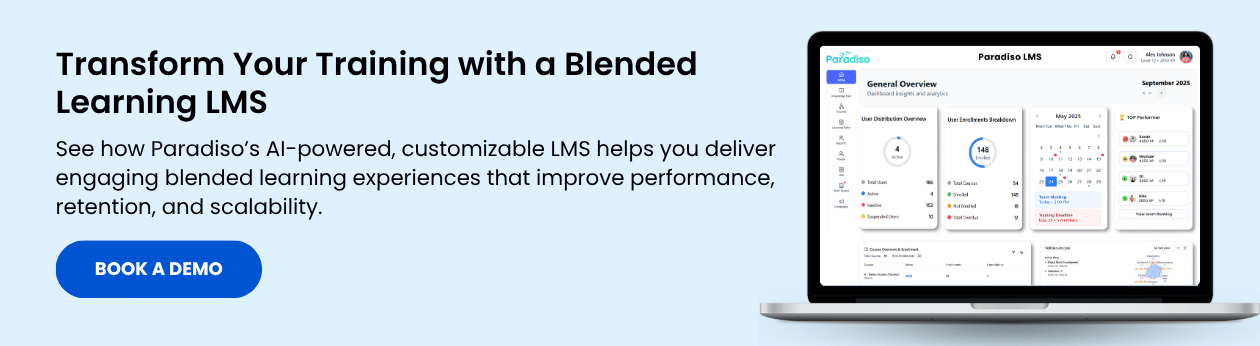
In today’s competitive landscape, effective employee training is vital for maintaining a skilled and adaptable workforce. Paradiso LMS (Learning Management System) offers a powerful platform that revolutionizes workplace training by seamlessly supporting blended learning approaches. With its comprehensive tools, Paradiso LMS enables organizations to deliver engaging, personalized training experiences that produce measurable results.
A primary advantage of Paradiso LMS is its capacity to facilitate blended learning—combining online content with traditional face-to-face instruction. Employees can access training materials at any time and from any location, while still benefiting from instructor-led sessions. The platform’s multimedia features—including videos, quizzes, and interactive modules—enhance engagement and help ensure retention of critical knowledge.
Paradiso LMS supports personalized learning pathways tailored to individual skill levels and career aspirations. Managers can assign targeted courses based on performance data, fostering continuous improvement. The system’s advanced tracking and reporting capabilities enable training managers to monitor progress, evaluate effectiveness, and demonstrate return on investment.
Furthermore, Paradiso LMS streamlines the administration of training programs, reducing workload and increasing scalability. Features like automated notifications, certification management, and analytics simplify workflow management, allowing HR teams to focus on strategic development. As a result, organizations benefit from consistent training delivery, faster onboarding, and improved compliance management.
By leveraging data insights from the platform, organizations can identify skill gaps and refine their training strategies effectively. This data-driven approach ensures that learning initiatives align with organizational objectives—enhancing productivity, employee growth, and competitive advantage.
Paradiso LMS is a transformative tool that empowers organizations to optimize workplace training. Its support for blended learning, personalized content, and comprehensive management tools enables the cultivation of a highly skilled, motivated workforce ready to meet future challenges efficiently.
Conclusion & Actionable Insights
In conclusion, adopting an effective blended learning strategy is crucial in today’s fast-paced educational and corporate environments. By integrating digital tools with traditional face-to-face training, organizations can create flexible, scalable, and personalized learning ecosystems suited to diverse needs.
Key takeaways include designing well-balanced blends that leverage the strengths of both online and offline methods, utilizing data analytics to optimize offerings, and incorporating interactive technologies to increase participation. Organizations that actively evaluate and refine their approaches will position themselves as leaders in innovation, driving sustained growth.
To maximize learning impact, consider conducting regular assessments of feedback and performance metrics, exploring emerging trends such as AI-driven personalization, and investing in robust Learning Management Systems like Paradiso LMS. These solutions facilitate scalable, engaging, and effective blended learning experiences.
Finally, embracing ongoing improvement and technological integration will help organizations foster a vibrant learning culture that supports long-term development. Begin your review today—identify gaps, implement incremental changes, and align training with your strategic objectives for a successful future.