“Empowering Progress: Leading the Automotive Industry with Innovation, Safety, and Excellence with a power-pack LMS”



“Empowering Progress: Leading the Automotive Industry with Innovation, Safety, and Excellence with a power-pack LMS”
The automotive sector necessitates ongoing education and skill development for its employees due to its fast-paced technical progress and strict regulations. Learning management systems (LMS) offer a consolidated platform for delivering, tracking, and managing training programs, which have become essential tools to address these objectives. Using Learning Management Systems in the automotive industry, tailored educational content is available anytime, anywhere, from compliance training and technical skills to soft skills and leadership development.
The automotive industry is undergoing a massive shift as it puts more money into creating electric, driverless, and highly connected cars. Because of this, there is an urgent need for industry to provide regular training. A learning management system in the automotive industry can ensure that their employees receive frequent training, so they are prepared for the upcoming change.
One of the many developments causing the business to shift so quickly is the development of autonomous vehicles. Though they aim to lower the possibility of human error on the roads, autonomous vehicles could redefine humans’ entire relationship with driving. Furthermore, consumers should anticipate increased in-car technology and continued vehicle-to-vehicle and traffic infrastructure communication advancements.
Along with advancements in connection and self-driving car technology, models should be released yearly, making the days of waiting anxiously for new versions obsolete. Sales strategies must be adjusted, and enhanced product knowledge is necessary to accommodate this new customer behavior, as the industry’s changes have shaped the traditional consumer thinking when it comes to acquiring vehicles.
At its core, an LMS software platform is a centralized portal used to deliver, manage, and track training programs. By leveraging digital technology, automotive companies can provide “just-in-time” learning modules—accessible on mobile devices—ensuring that deskless workers have the info they need, right when they need it.

Learning Management Systems (LMS) are being used by the automobile sector more and more to improve training and development procedures. Learning management systems in the automotive industry is essential in recent times. Standardized training, effective compliance training, and affordable solutions that reduce the need for in-person meetings are just a few of the advantages that come with an LMS.
These programs offer adaptable, on-demand learning experiences that enhance performance monitoring and fit a variety of schedules. LMS for the automotive industry helps upskill staff with the newest automotive technology while minimizing operational downtime, which boosts overall efficiency and production in the sector. It does this by centralizing resources and encouraging improved communication.
10 Benefits of Learning Management Systems in the Automotive Industry
Not all platforms are built for the rigors of the automotive world. You need a system that offers robust reporting and seamless enterprise integration.
In the high-stakes landscape of 2026, integrating a robust Learning Management System in the automotive industry has transitioned from a digital luxury to a strategic engine for survival. As vehicles evolve into software-defined ecosystems defined by high-voltage EV architectures and AI-driven autonomous systems, the “skills gap” has become the primary bottleneck for manufacturers and dealerships alike.
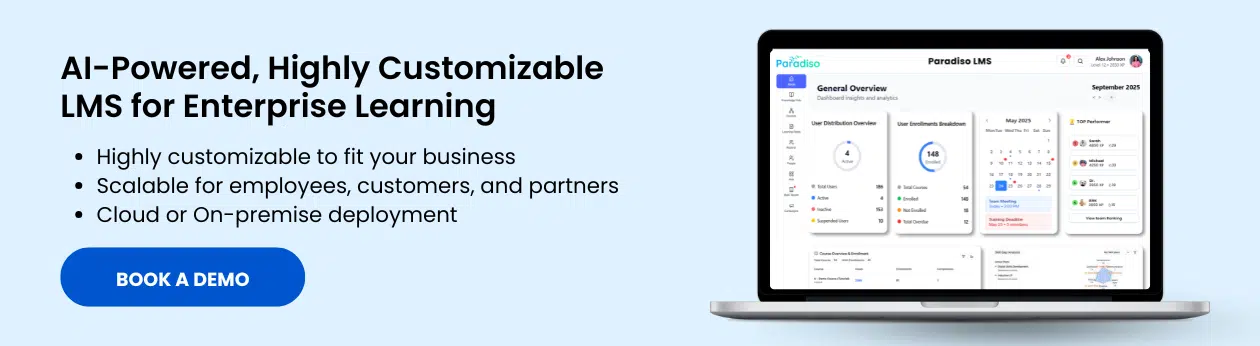
By leveraging a feature-rich platform like Paradiso LMS, businesses can turn their training departments from traditional cost centers into high-performance competitive advantages that bridge the gap between legacy mechanical expertise and a digital-first future. Whether it is automating complex safety certifications, delivering “just-in-time” technical manuals to the shop floor, or empowering sales teams to build deeper customer trust through superior product knowledge, a power-packed LMS ensures your growth remains steady, your compliance remains ironclad, and your innovation remains miles ahead of the competition.
The automotive industry evolves rapidly with advancements in electric vehicles, autonomous driving, and connected technologies. An LMS ensures employees receive continuous, standardized training to stay aligned with technical updates and regulatory requirements.
An LMS delivers structured courses on new vehicle technologies, diagnostics, manufacturing processes, and safety protocols, allowing technicians and engineers to upgrade their skills efficiently.
Yes. LMS platforms track mandatory certifications, safety training, and compliance programs, helping organizations meet industry standards and avoid penalties.
By shifting from in-person workshops to digital training modules, companies reduce travel, instructor fees, venue costs, and operational downtime.
Absolutely. An LMS enables centralized training delivery to dealerships, service centers, and regional teams, ensuring consistent product knowledge and customer service standards.

Follow us!