Expert Guide to Top LMS Solutions: Spotlight on Paradiso LMS
Customer education has become a core growth strategy for modern businesses. Whether you’re a SaaS company, product-based brand, or enterprise with a large customer base, offering structured training helps customers understand your product better—leading to higher adoption, reduced support tickets, and stronger brand loyalty. A Customer Training LMS brings all these experiences into one centralized platform.
It empowers businesses to deliver consistent, on-demand learning across global audiences while ensuring every customer gets the guidance they need at the right time. With interactive modules, analytics, and automation, organizations can turn training into a scalable engine for customer success and long-term retention.
A Customer Training LMS is a learning management system designed to deliver training, onboarding, and product education specifically to customers. Unlike employee-focused LMS platforms, a customer training LMS is built for external learners, giving organizations the ability to create user-friendly, branded, and scalable learning portals.
In today’s competitive market, customers expect clear guidance and effortless onboarding from the moment they start using a product. A customer-focused LMS helps businesses deliver structured, engaging, and on-demand education that improves overall customer experience. By centralizing all training resources, an LMS simplifies how customers learn, adapt, and interact with your product—leading to stronger long-term value.
Faster, guided learning paths help customers get started quickly without relying heavily on support teams.
A Learning Management System plays a crucial role in delivering structured, engaging, and scalable product training to customers. It centralizes all learning materials, making it easy for users to explore your product at their own pace while reducing dependency on support teams. With interactive tools and automation, an LMS turns customer education into a seamless, efficient, and measurable process.
Customers can learn at their own speed, ensuring better retention and a smoother onboarding experience.
This flexibility reduces pressure on support teams and empowers customers to explore features independently.
Customers across different time zones can access learning anytime, leading to consistent and convenient onboarding.
It supports continuous learning even after the initial onboarding phase.
Points, badges, and leaderboards keep customers motivated and excited about completing training.
Gamification increases completion rates and encourages customers to explore more features.
Quizzes and tests validate the customer’s understanding and highlight areas that require improvement.
This helps businesses ensure customers are fully prepared to use the product effectively. Points, badges, and leaderboards keep customers motivated and excited about completing training.
Gamification increases completion rates and encourages customers to explore more features.
Detailed reports highlight user progress, completion rates, and content performance.
These insights allow businesses to refine training materials for better results.
| LMS Name | Target Audience / Best For | Key Features |
|---|---|---|
| Paradiso LMS | Organizations looking to scale customer & partner training | AI-powered, multi-tenant portals, integrations (Salesforce, HubSpot, Zendesk, Zoom), fully branded experience |
| TalentLMS | SMBs seeking a simple, user-friendly LMS | Clean UI, customizable portals, mobile learning support |
| MindScroll LMS | Businesses needing fast deployment for customer training | Cloud-based, assessment tools, eCommerce, mobile apps |
| 360Learning | Companies emphasizing collaborative learning | SME contributions, collaborative course creation, customer engagement |
| Docebo | Enterprises seeking advanced AI-driven training | AI LMS, automation, personalization, advanced analytics |
| Skilljar | Customer education teams focused on onboarding & certification | Dedicated customer LMS, onboarding tools, integrations, certification |
| Absorb LMS | Organizations needing scalable external training | Automation, global content distribution, sleek learner interface |
| Northpass | Customer education teams | No-code course creation, CRM integrations, mobile-friendly experiences |
| LearnUpon | Businesses delivering product demos, onboarding, certifications | Multi-tenant LMS, scalable, supports demos, onboarding & certifications |
| Teachable | Coaches, creators, small businesses | Customer/product education via paid or free courses |
| LearnWorlds LMS | Academies & organizations needing interactive learning | Interactive video tools, assessments, branding options |
| Nimble LMS | Businesses needing quick, simple customer training | Intuitive interface, fast deployment, minimal technical complexity |
Just answer a few quick questions, and we’ll match you with the perfect LMS within your budget.
Explore our comprehensive list of LMS platforms that consulting firms should consider, complete with detailed descriptions and feature-rich summaries.
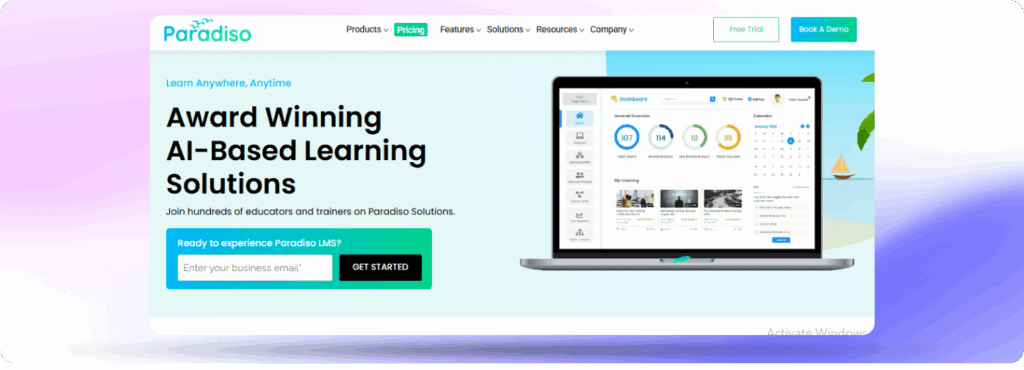
An AI-powered, all-in-one platform designed for customer and partner training. With multi-tenant portals, rich integrations (Salesforce, HubSpot, Zendesk, Zoom, etc.), and a fully branded experience, it is ideal for organizations that want to scale customer learning.
Paradiso LMS also provides advanced analytics to measure engagement and ROI, along with customizable gamification and certification options to enhance learner motivation. Its cloud-based architecture ensures accessibility anytime, anywhere.
Give each consulting client a dedicated, branded training portal with custom dashboards, courses, and reporting.
Create full courses, quizzes, and lessons in minutes using the AI-powered authoring tool, reducing development time drastically.
Sell courses, bundles, certifications, and subscription-based programs to clients in any region.
Connect with Salesforce, Zoom, HubSpot, Microsoft, HRMS, CRM systems, and your existing tech stack.
Generate automated reports for clients, track engagement, performance, and learning ROI.
Deliver training on-the-go with responsive mobile apps and offline download functionality.


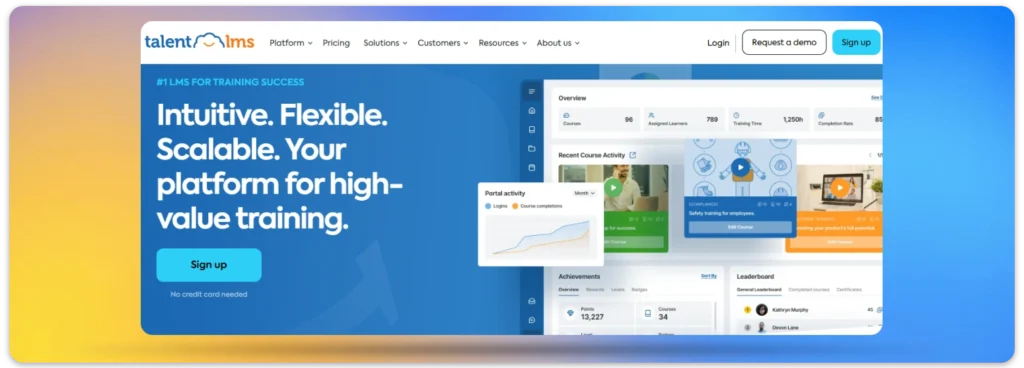
A simple, user-friendly LMS perfect for SMBs, known for its clean UI, customizable portals, and mobile learning support. TalentLMS allows businesses to quickly deploy training programs with minimal technical expertise. It supports blended learning, allowing a combination of online courses, webinars, and instructor-led sessions. Its reporting and analytics tools help track learner progress and course effectiveness.
Cloud-based LMS designed for fast deployment, offering assessment tools, eCommerce, and mobile apps for customer training. MindScroll LMS focuses on quick onboarding, making it suitable for businesses with limited IT resources. It enables secure content delivery and allows companies to monetize courses via eCommerce integration. Mobile apps support offline learning for learners on the go.
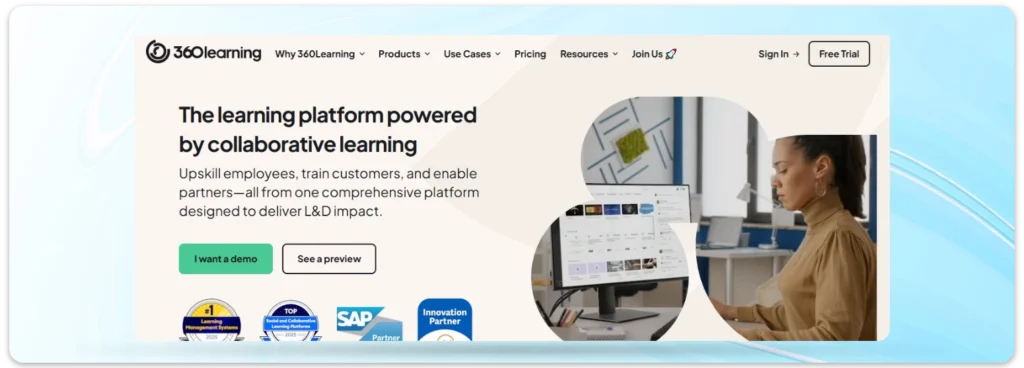
Collaborative learning platform enabling companies to create training content with SME contributions, enhancing customer engagement. 360Learning emphasizes social and collaborative learning, allowing employees, partners, and customers to learn together. The platform’s automation features help reduce administrative work while keeping training up-to-date. It supports multi-language content for global teams.
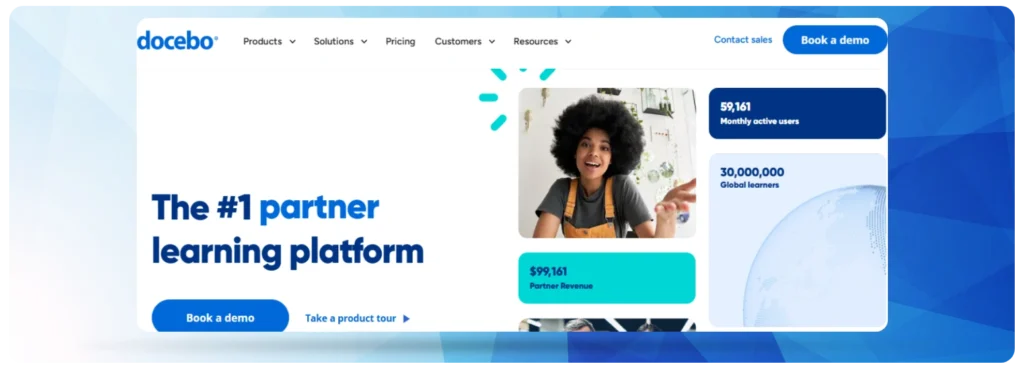
Docebo is an enterprise-grade LMS built for large consulting organizations handling complex global learning requirements. Its AI-driven recommendations and automation features make it valuable for consultancies focused on personalized learning and data-rich training environments.
Docebo excels in environments where consulting firms need to manage a large volume of content, users, and integrations while delivering consistent, branded client experiences.
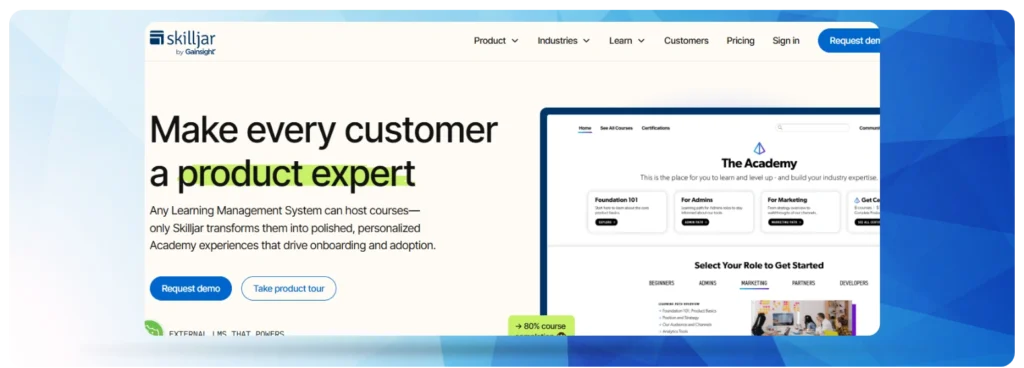
Dedicated platform for customer education with advanced onboarding tools, integrations, and certification capabilities. Skilljar enables businesses to deliver engaging, self-paced training that drives customer success. Its automated onboarding journeys reduce manual work while ensuring consistency across learners. Skilljar also provides detailed analytics to measure training effectiveness and adoption rates.
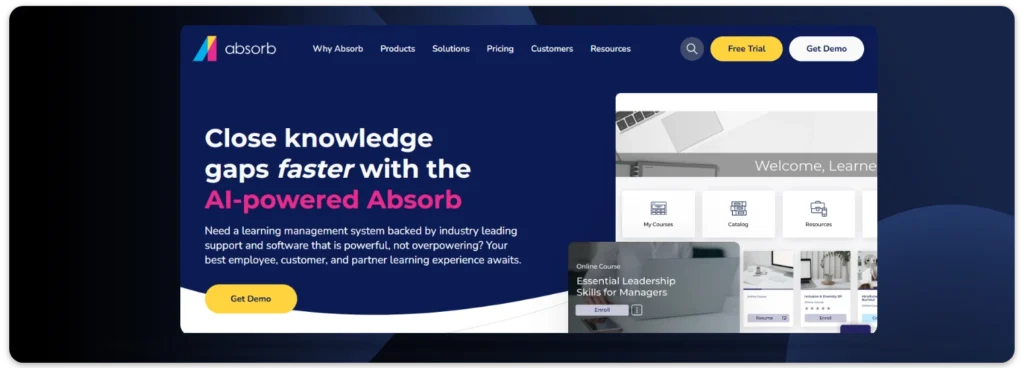
Absorb LMS is built for consultancies that offer team-based learning, group workshops, and collaborative training experiences. Its social learning capabilities enable clients and teams to co-create content, share insights, and participate in discussions. This makes it a strong fit for consulting firms specializing in organizational development, team-building, and internal capability-building programs.
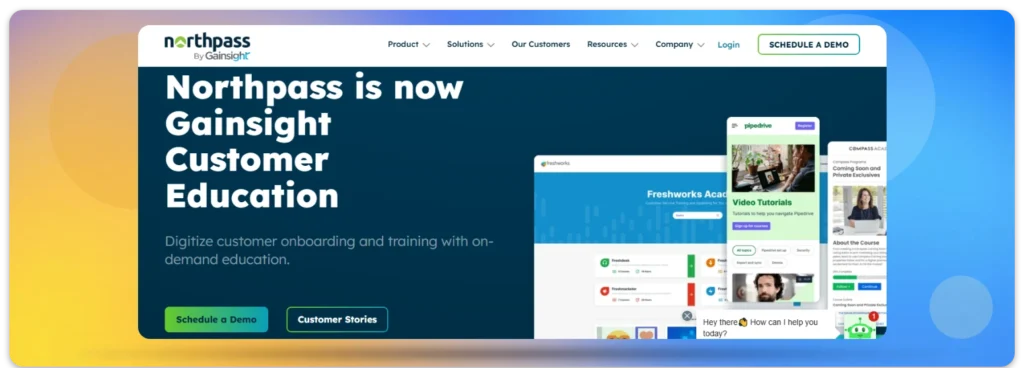
Built for customer education teams, Northpass offers no-code course creation, CRM integrations, and mobile-friendly experiences. Northpass emphasizes simplicity and speed, allowing teams to launch training programs without IT support. It also supports learner engagement through interactive content and assessments. Advanced analytics provide insights into customer learning and adoption.
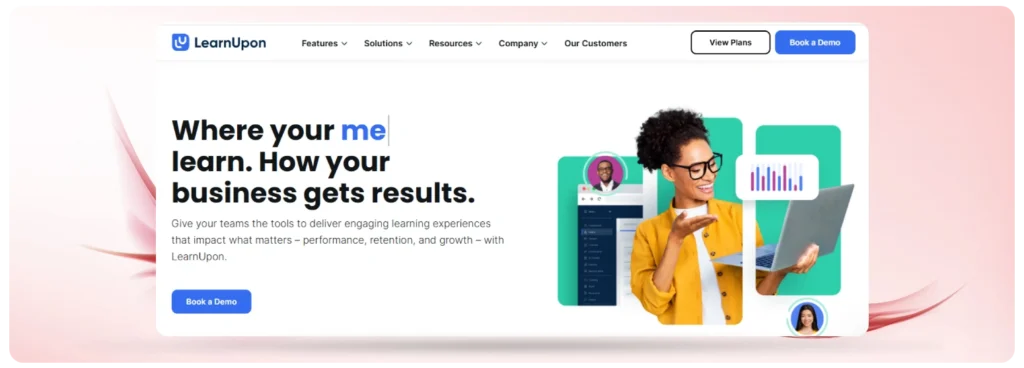
Multi-tenant LMS that helps businesses deliver product demos, onboarding courses, and certification programs at scale. LearnUpon focuses on scalable learning programs for multiple audiences, including customers, partners, and employees. It supports automated workflows and integrates with webinar platforms, CRMs, and HR systems. Detailed analytics help monitor learner progress and training effectiveness.
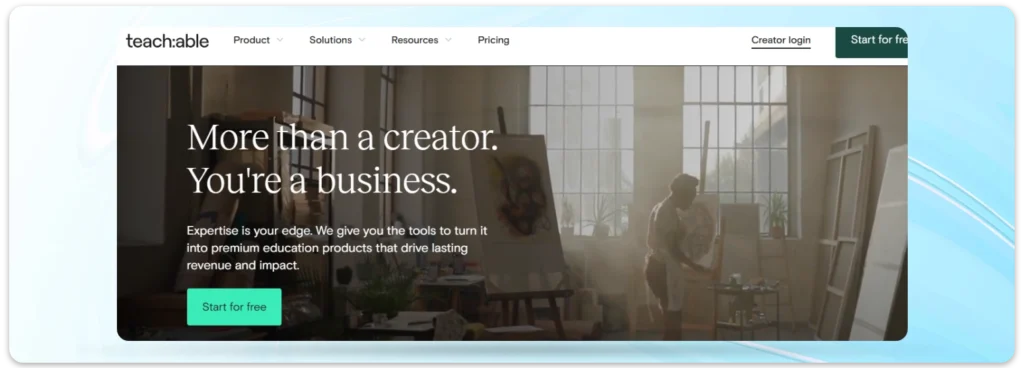
Ideal for coaches, creators, and small businesses offering customer or product education through paid or free courses. Teachable allows users to create engaging online courses with multimedia content. It provides built-in eCommerce features for monetization and student management. The platform supports customizable branding, course completion certificates, and performance analytics.
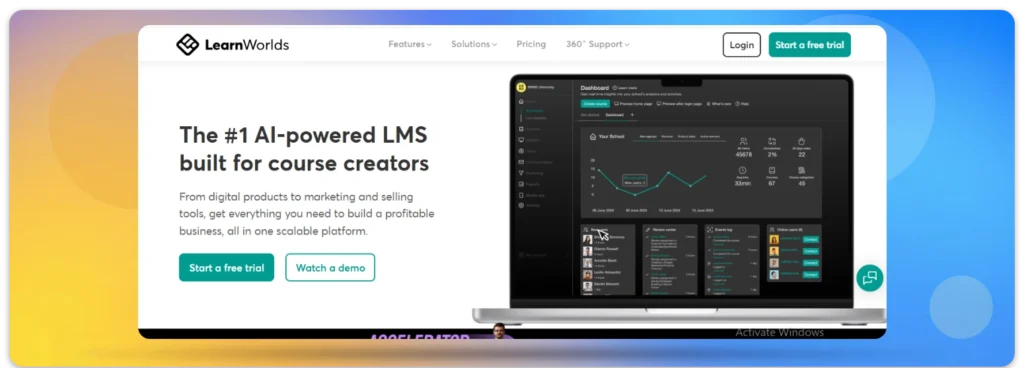
Powerful platform with interactive video tools, assessments, and branding options for customer training and academies. LearnWorlds focuses on learner engagement with interactive videos, quizzes, and gamification. It allows businesses to monetize courses through subscriptions or one-time payments. Its white-labeling and branding options make it ideal for creating custom online academies.
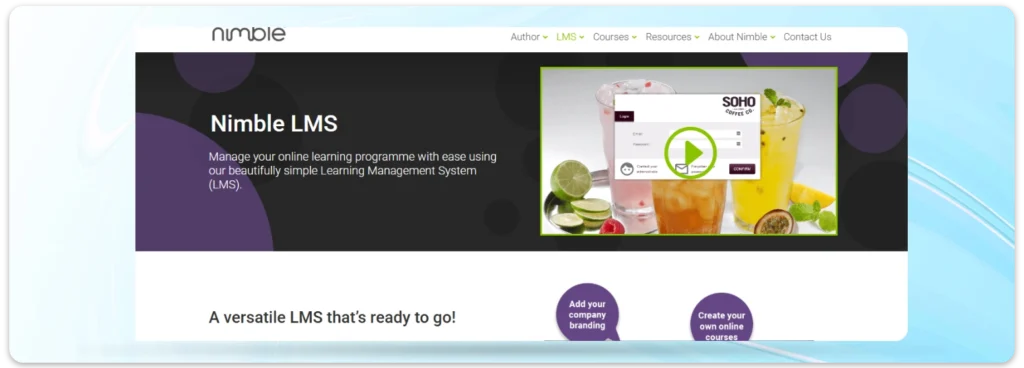
Simple and intuitive LMS for businesses wanting quick customer training deployment without technical complexity. Nimble LMS enables fast setup, easy course creation, and immediate learner enrollment. It provides mobile-friendly access and basic analytics to track learner progress. Its simplicity makes it suitable for organizations with limited resources or training teams.
Choosing the right LMS for customer training starts with focusing on usability and flexibility. Ensure the platform is easy for both admins and learners, supports seamless scalability as your customer base grows, and integrates smoothly with essential systems like CRM, helpdesk, and product tools. These factors help streamline onboarding and deliver a frictionless learning experience.
You should also evaluate customization features, analytics depth, and learning accessibility. Look for an LMS that offers strong white-labeling options, multi-tenant support, and AI-driven automation for personalization. Additionally, mobile compatibility, reliable customer support, and pricing transparency all contribute to long-term success.
Paradiso LMS helps businesses deliver highly personalized customer learning experiences by offering AI-powered content recommendations tailored to each user’s behavior and progress. With dedicated customer portals, custom-branded academies, and interactive learning modules like videos, simulations, and assessments, companies can create engaging and structured learning journeys. The platform seamlessly integrates with CRM, support systems, and product analytics tools while supporting multiple content formats such as SCORM, xAPI, videos, PDFs, and webinars. Additionally, automated certifications and rewards keep customers motivated, helping organizations accelerate onboarding, boost satisfaction, and build loyal, well-educated users who get maximum value from the product.
Together with its robust automation and analytics, Paradiso LMS gives businesses the insights they need to continuously refine training programs. By tracking learner progress, content performance, and engagement metrics, companies can optimize their customer education strategy and deliver an experience that evolves with user needs.
Customer education plays a crucial role in driving product adoption, customer satisfaction, and long-term loyalty. Choosing the right Customer Training LMS helps businesses deliver seamless onboarding, reduce support costs, and improve customer engagement. With platforms like Paradiso LMS leading the way, organizations can create personalized, scalable learning experiences that empower customers to succeed.
A strong customer training program not only helps users understand your product but also builds confidence and trust in your brand. By offering interactive tutorials, role-based learning paths, and continuous skill development, companies can ensure customers get the maximum value from their investment. This leads to higher retention rates, increased product usage, and a more informed user base that advocates for your brand.


A scalable, AI-powered learning platform with advanced analytics and mobile access—built to drive performance across your organization.

Rapidly create professional, interactive courses with AI-driven course-building tools tailored for business training.

Practice real-world scenarios with AI-powered simulations to build skills, improve performance, and prepare every team for confident, high-impact conversations.
Solutions
Industry