Best LMS Platforms for Consulting Firms
Expert Guide to Top LMS Solutions: Spotlight on Paradiso LMS
Introduction
Consulting firms operate in a highly dynamic, client-driven environment where every project demands tailored training, consistent communication, and measurable outcomes. Whether you’re delivering advisory services, leadership development, compliance programs, operational training, or digital transformation consulting—an LMS helps you package your expertise into scalable learning solutions. With features like multi-client portals, AI course creation, white-label branding, automated reporting, and eCommerce, the right LMS enables consulting firms to deliver high-impact training while reducing operational workload. In this listicle, we explore the best LMS for consulting firms, complete with features, pros, cons, and pricing so you can choose the perfect platform for your consulting workflow.
Why Consulting Firms Need an LMS
Consulting companies require learning platforms that go beyond basic training delivery. They need systems that support multi-client management, white-label portals, course monetization, analytics, and content flexibility.
-
Multi-Client Training Delivery
Consultants work with multiple clients across various industries. A multi-tenant LMS helps manage separate learning portals, branding, users, and reports. -
Scalable & Automated Training
Consulting firms train large client groups. Automations reduce manual work by handling enrollments, reminders, progress tracking, and certifications. -
eCommerce & Program Monetization
For consultants selling digital courses or certification programs, a built-in eCommerce engine simplifies global sales. -
Advanced Analytics & Reporting
Compliance, progress tracking, assessment results, and performance dashboards help consultants demonstrate ROI to clients.
How to Choose the Best LMS for Consulting Firms
Selecting the right LMS is crucial for delivering scalable, branded, and measurable training for clients. Consulting organizations should evaluate features not just for internal learning but also for client education, certification programs, and global delivery.
1. Look for Multi-Tenant Architecture
A multi-tenant LMS allows consultants to create separate, branded training portals for each client, ensuring privacy and customization.
This is essential for firms handling multiple enterprise accounts simultaneously.
2. Prioritize White-Labeling & Branding
Consulting firms must be able to embed their identity or the client’s brand into the portal, courses, dashboards, and certificates.
White-labeling improves client trust and enhances training professionalism.
3. Ensure Strong Reporting & Analytics
Consultants need data to prove ROI and showcase training results to clients through automated reports, dashboards, and KPIs.
Analytical insights help refine training programs and support long-term engagements.
4. Evaluate Integrations & Tech Compatibility
Check if the LMS integrates with CRM, HRMS, webinar tools, and analytics platforms.
Integrations save time, reduce manual work, and create a unified consulting workflow.
Key Benefits of Using an LMS for Consulting Firms
Implementing an LMS offers consulting companies significant operational, financial, and performance advantages. These benefits help improve client satisfaction, program effectiveness, and recurring revenue opportunities.
1. Scalable Training Across Multiple Clients
Instead of manually managing client training, consultants can deliver courses in bulk, at scale, and across dozens of client groups.
This allows higher margins with less operational overhead.
2. Faster Client Onboarding & Implementation
Consultants can provide pre-built training modules, onboarding paths, and documentation to new clients instantly.
This reduces project timelines and enhances productivity.
3. Monetization Through Course Sales
Built-in eCommerce lets consulting firms turn expertise into revenue by selling courses, certifications, coaching, or membership access.
Works for global audiences with payment gateway integrations.
4. Improved Client Retention & Repeat Engagements
With continuous learning, certifications, and analytics, consulting firms can demonstrate long-term value and increase client retention.
Better engagement leads to stronger partnerships and upsell opportunities.
Top 10 Best LMS for Consulting Firms
| LMS Platform | Best For | Key Strengths | Pricing |
|---|---|---|---|
| Paradiso LMS | All-in-one LMS for consulting firms | Multi-tenant portals, AI course builder, eCommerce | Custom pricing |
| ProProfs Training Maker | Small consulting teams | Simple builder, templates, basic analytics | Free for 10 users; Paid $1.99/user/month |
| Litmos | Video-based assessments | Fast setup, mobile-first, video assessment tools | Starts at $3/user/month |
| Absorb LMS | Enterprise-level consulting firms | Modern UI, strong reporting, automation engine | Starts at $800/month |
| Docebo | Enterprise AI-powered learning | AI recommendations, scalable, global integrations | Starts at $25,000/year |
| D2L Brightspace | Academic-style consulting programs | Hybrid learning, interactive tools, accessibility | Starts at $69/year |
| iSpring Learn | Microlearning and short lessons | Fast publishing, micro modules, strong tracking | Starts at $2.29/user/month |
| 360Learning | Collaborative team-based learning | Peer learning, social tools, rapid authoring | Starts at $8/user/month |
| Tovuti LMS | Personalized & visually rich training | Customization, gamification, branded portals | Starts at $11,160/year |
| Canvas LMS | Mobile-first & blended learning | Powerful mobile apps, hybrid learning, integrations | Custom pricing |
Find the Best LMS in 30 Seconds!
Just answer a few quick questions, and we’ll match you with the perfect LMS within your budget.
Top LMS for Consulting Firms – Full Comparison
Explore our comprehensive list of LMS platforms that consulting firms should consider, complete with detailed descriptions and feature-rich summaries.
Paradiso LMS
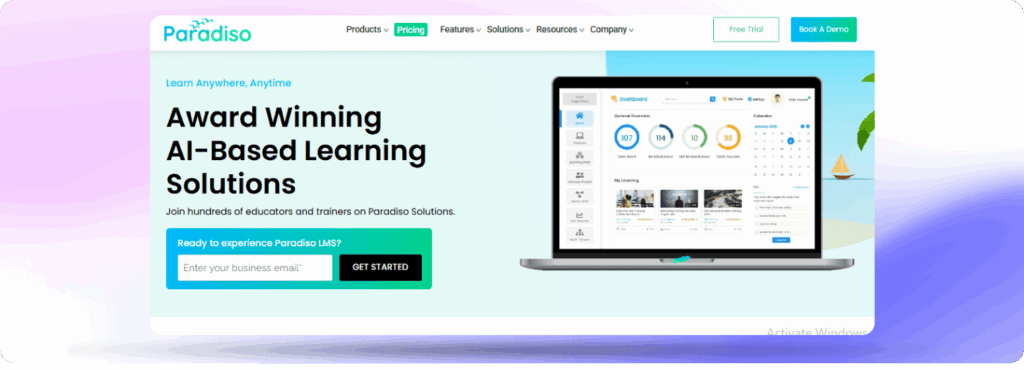
Paradiso LMS is a feature-rich, AI-powered platform tailored for consulting companies that deliver training to multiple clients. With multi-tenant portals, built-in AI course creation, and eCommerce capabilities, it is ideal for both boutique and enterprise consulting firms.
Paradiso simplifies how consultants create, manage, and sell learning programs by offering a unified environment that combines training delivery, automation, analytics, and client management.
It supports complex consulting workflows such as cohort-based training, global rollouts, client branding, and compliance tracking—making it one of the most versatile platforms in the industry.
Key Features of Paradiso LMS:
1. Multi-Tenant Client Portals
Give each consulting client a dedicated, branded training portal with custom dashboards, courses, and reporting.
2. AI Course Creation
Create full courses, quizzes, and lessons in minutes using the AI-powered authoring tool, reducing development time drastically.
3. eCommerce & Global Selling
Sell courses, bundles, certifications, and subscription-based programs to clients in any region.
4. 100+ Integrations
Connect with Salesforce, Zoom, HubSpot, Microsoft, HRMS, CRM systems, and your existing tech stack.
5. Advanced Analytics & Reporting
Generate automated reports for clients, track engagement, performance, and learning ROI.
6. Mobile Learning & Offline Access
Deliver training on-the-go with responsive mobile apps and offline download functionality.
Pros:
- Robust multi-tenant architecture for consulting firms
- AI course builder saves time and cost
- Fully branded portals for each consulting client
- Built-in eCommerce and subscription management
- Strong integrations with CRM, HRIS, and analytics tools
Cons:
- Advanced customization may require initial setup support
Why It Stands Out:
ProProfs Training Maker
ProProfs is a lightweight training platform suitable for consulting firms that need quick, simple, no-code course creation for internal or small external training.
It’s designed for consultants who want to launch training quickly without complex setup, making it ideal for onboarding clients or delivering basic informational courses.
The platform works well for firms that don’t require deep analytics or multitenancy but still need a dependable tool for training delivery.
Key Features:
- Easy Course Builder
- Basic Analytics
- Simple UI
Pros:
- Beginner-friendly interface
- Offers ready-made templates and quizzes
- Good for onboarding and micro training
Cons:
- Limited customization
- Not ideal for multi-client delivery
- Reporting is basic
Litmos
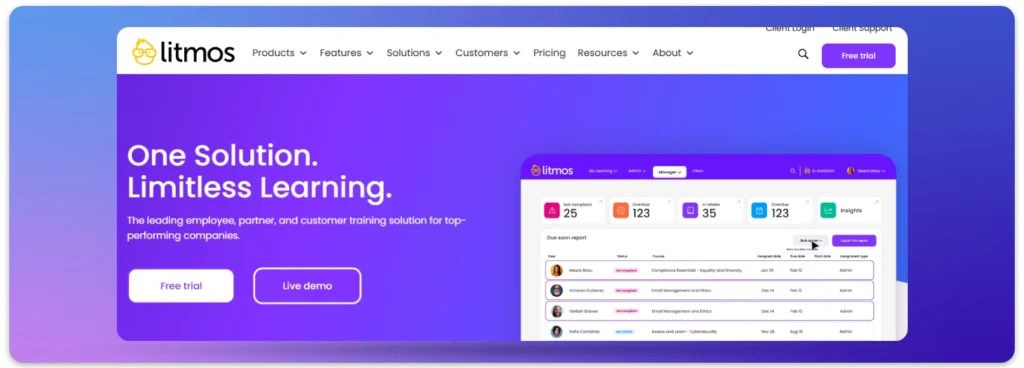
Litmos is ideal for consulting firms that rely heavily on video assessments, compliance training, and mobile-first learning.
It provides fast deployment and a streamlined interface, perfect for consultants who want to roll out training programs rapidly without IT support.
With its strong mobile optimization, Litmos is a trusted choice for leadership development firms, coaching consultancies, and organizations needing flexible, on-the-go training.
Key Features:
- Fast Deployment
- Video Assessment Features
- Mobile-First Experience
Pros:
- Easy to set up
- Good for compliance-based programs
- Excellent mobile UI
Cons:
- Limited multi-tenant options
- Basic customization
- Reporting could be stronger
Absorb LMS
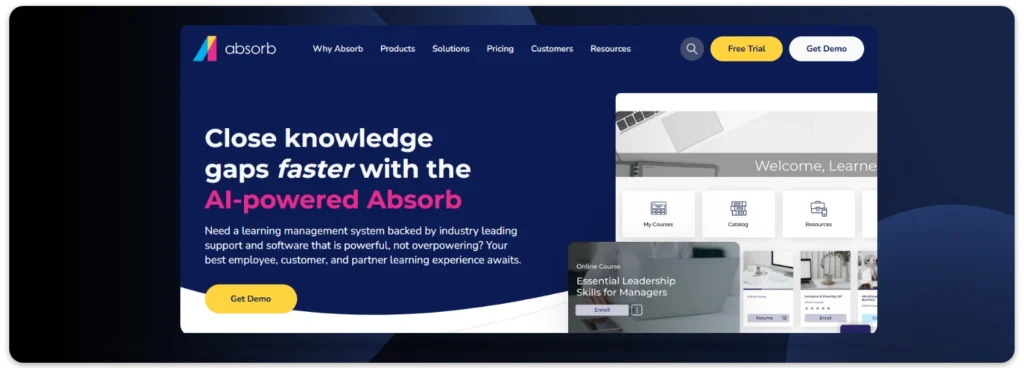
Absorb offers a polished, enterprise-ready LMS known for exceptional learner experience and advanced administrative features.
It is especially suitable for consulting firms working with large corporate clients who require high performance, deep reporting, and global scalability.
Absorb’s automation engine enables consultancies to streamline enrollment, notifications, and compliance workflows for thousands of users across different accounts.
Key Features:
- Modern UI/UX
- Strong Reporting Tools
- Automation Engine
Pros:
- Highly polished design
- Excellent reporting
- Good content compatibility
Cons:
- Expensive for smaller consultancies
- Multi-tenancy available only at higher plans
Docebo
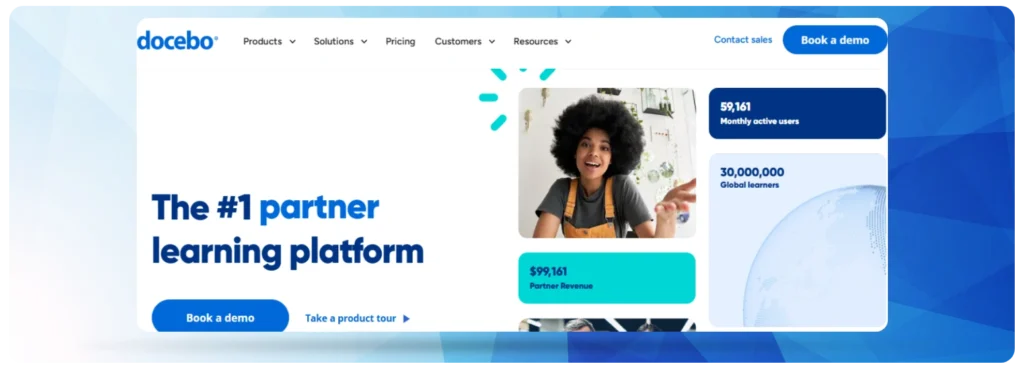
Docebo is an enterprise-grade LMS built for large consulting organizations handling complex global learning requirements.
Its AI-driven recommendations and automation features make it valuable for consultancies focused on personalized learning and data-rich training environments.
Docebo excels in environments where consulting firms need to manage a large volume of content, users, and integrations while delivering consistent, branded client experiences.
Key Features:
- Enterprise Integrations
- Strong Reporting Tools
- White-Labeling
Pros:
- Strong AI features
- Great for global consulting enterprises
- Highly scalable
Cons:
- High pricing
- Requires technical experience
iSpring Learn
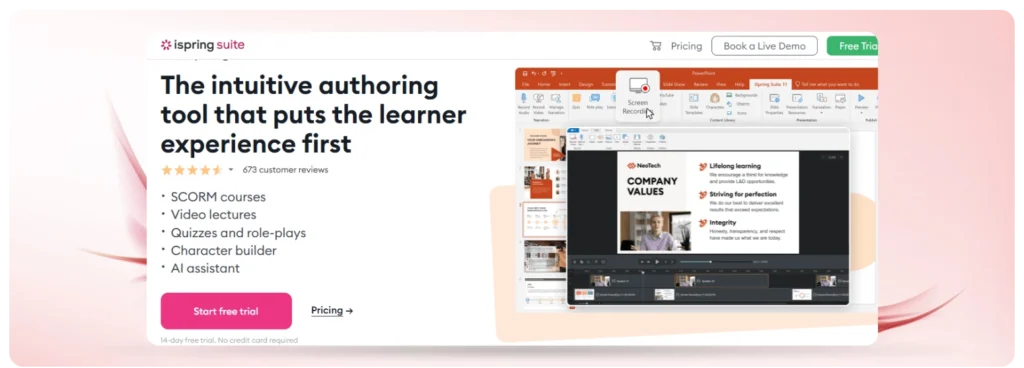
iSpring Learn focuses on microlearning and rapid content creation, making it excellent for consultants who deliver short, actionable training.
Its deep integration with PowerPoint allows trainers to convert presentations into full eLearning courses quickly.
This platform is especially useful for consulting firms providing process training, product refreshers, or quick client onboarding programs.
Key Features:
- Microlearning Modules
- Strong Reporting Tools
- Fast Publishing
Pros:
- Great for short-form training
- Excellent authoring tools
- Easy deployment
Cons:
- Not ideal for multi-tenant clients
- Limited customization
360Learning
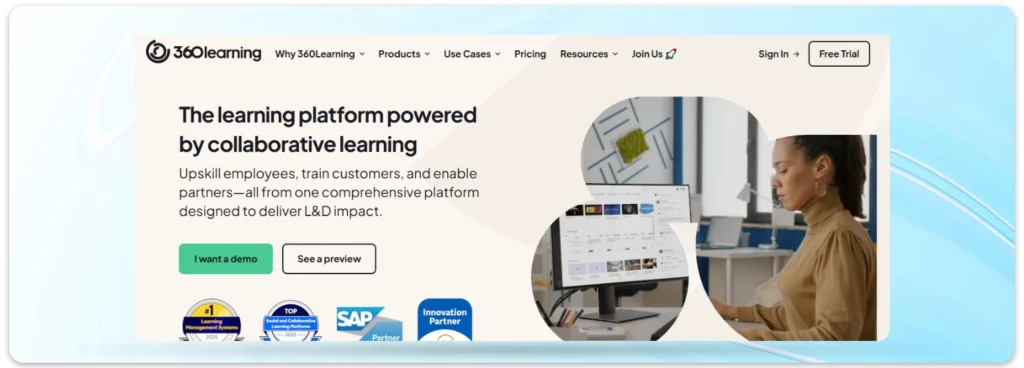
360Learning is built for consultancies that offer team-based learning, group workshops, and collaborative training experiences.
Its social learning capabilities enable clients and teams to co-create content, share insights, and participate in discussions.
This makes it a strong fit for consulting firms specializing in organizational development, team-building, and internal capability-building programs.
Key Features:
- Peer Reviews & Feedback Loops
- Modern Social Learning Tools
- Rapid Authoring
Pros:
- Strong collaborative learning
- Great for onboarding and workshops
- Easy deployment
Cons:
- Limited multi-client support
- No deep eCommerce options
Tovuti LMS
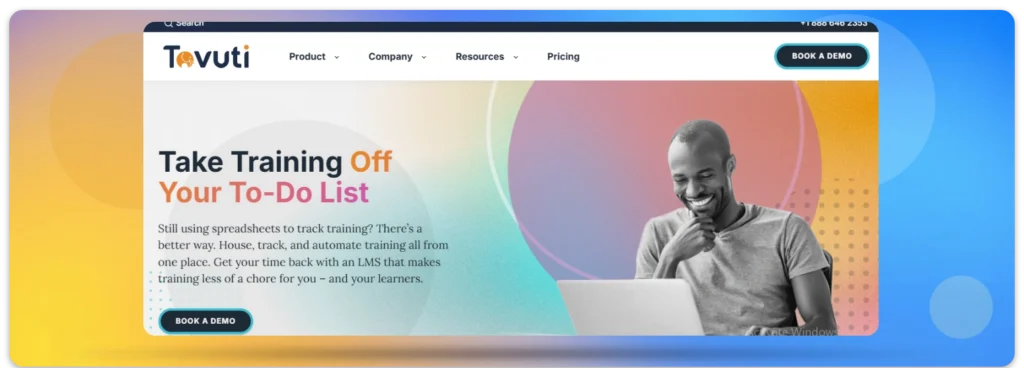
Tovuti is a highly customizable LMS that supports visually rich, branded training experiences for consulting firms.
With its large set of widgets, interactive tools, and personalization features, it is ideal for firms delivering creative, design-heavy, or multimedia learning programs.
Tovuti’s advanced admin tools also provide consulting organizations with full control over user management, pathways, and learning structures.
Key Features:
- Highly Customizable Portals
- Interactive Features
- Strong Admin Tools
Pros:
- Feature-rich and highly customizable
- Strong interactive tools
- Excellent branding options
Cons:
- High pricing
- Steeper learning curve
Canvas LMS
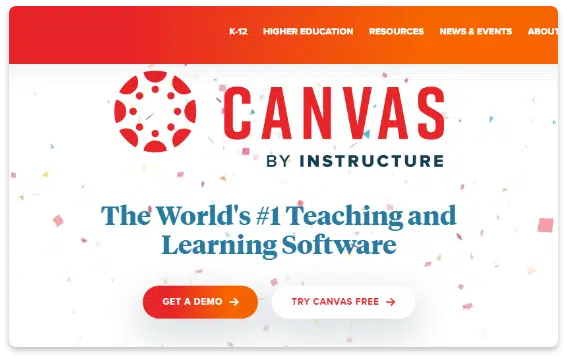
Canvas is an education-first platform adopted by many consulting firms due to its strong mobile apps and collaboration tools.
It supports blended learning through discussions, assignments, virtual classrooms, and seamless content integration.
Canvas is best suited for consultancies offering hybrid training, long-term learning pathways, or professional certification programs requiring high engagement.
Key Features:
- Mobile Apps
- Collaboration & Discussions
- Open Ecosystem
Pros:
- Excellent mobile learning
- Great for blended learning
- Reliable and scalable
Cons:
- Custom pricing
- Limited eCommerce features
The Future of LMS Platforms for Consulting Firms: What to Expect by 2026 & Beyond
The future of LMS platforms for consulting firms will be driven by AI, automation, multi-client management, and intelligent personalization. By 2026, consulting organizations can expect LMS systems that automatically generate content, design tailored learning paths for each client, and use predictive analytics to identify competency gaps before they affect project outcomes. AI-powered tutors, chat-based assistants, and intelligent recommendations will enhance learner engagement and provide 24/7 support, reducing manual intervention for consultants. LMS platforms will evolve into complete training ecosystems, offering microlearning, blended learning, mobile learning, client-specific portals, and immersive AR/VR simulations designed for real consulting scenarios.
At the same time, consulting workflows will become more efficient through deeper integrations with CRM tools, HR systems, project management software, and communication platforms—allowing training to flow seamlessly into existing client operations. Scalability and client-wise separation will become essential, supported by features such as multi-tenant architectures, white-label training portals, contract-based access control, advanced eCommerce, and global mobile accessibility. By 2026 and beyond, next-generation LMS solutions will enable consulting firms to deliver smarter, more adaptive, and highly scalable client training, redefining how consulting expertise is packaged, delivered, and monetized.
Conclusion
Choosing the right LMS is a strategic move for consulting firms that want to scale operations, automate client training, and deliver consistent, high-quality learning experiences across multiple accounts. Modern LMS platforms—equipped with AI-generated course creation, multi-tenant client portals, immersive training tools, and robust analytics—dramatically reduce manual effort while improving client satisfaction and project outcomes.
As consulting services continue shifting toward digital delivery and productized training, adopting a future-ready consulting LMS ensures your firm stays competitive, offers superior client experiences, and accelerates revenue growth. Whether your goal is to expand your consulting offerings, launch a branded academy, onboard clients efficiently, or monetize your expertise, a powerful LMS becomes the foundation for long-term success.
Table Of Content
Q&A Session
Have questions? Click here.