WhatsApp Chat

   Try our eLearning Authoring Tool     Get Started Free

12 Best Extended Enterprise LMS Platforms for 2026: The Definitive Guide

Extended Enterprise Training

What is an Extended Enterprise LMS?

Imagine a digital key that unlocks the potential of every individual linked to your business. That’s what an Extended Enterprise LMS does—turning the learning dial beyond your employees to empower partners, suppliers, and customers with the know-how they need to excel. It’s a simple, smart solution to align your entire business network with your goals, ensuring everyone is on the same page, no matter where they are.

Defining the 2026 Ecosystem

To understand the power of this “digital key,” we must look at two core components:

  • The Extended Enterprise: This refers to your organization’s interconnected ecosystem that goes beyond internal boundaries, encompassing suppliers, distributors, and partners.
  • Extended Enterprise Training: These are the specific educational initiatives provided to these stakeholders to ensure skill enhancement, sales knowledge, and support excellence.

In today’s landscape, this system acts as an invisible infrastructure. By using advanced multi-tenant architecture and custom domains, it turns the learning journey into a shared path toward collective success while keeping your brand at the center of every interaction.

Why is an LMS Crucial for Maximizing the Impact of Extended Enterprise Training?

An LMS (Learning Management System) is essential for optimizing extended enterprise training. It ensures scalable, consistent, and customizable training for stakeholders regardless of their location. With real-time tracking and mobile-friendly capabilities, it offers flexibility and monitoring.

Being digital, it’s cost-effective and allows for quick content updates. Enhanced with multimedia, it promotes engagement. Moreover, its feedback tools and integration potential make it a comprehensive solution, aligning all stakeholders with an organization’s goals and values.

Benefits of an Extended Enterprise LMS

1) Multi-Tenancy: Paradiso LMS’s multi-tenancy feature allows businesses to run multiple departments or partner companies from a single LMS instance, offering scalability and streamlined management.

2) Integration Capabilities: Known for its robust integration features, Paradiso LMS can seamlessly connect with various enterprise software systems, such as CRM, HRIS, and webinar tools, creating a holistic learning environment.

3) Gamification and Engagement: Paradiso LMS incorporates gamification tools that make learning interactive and engaging, leading to increased learner retention and motivation.

4) Advanced Reporting: With its detailed analytics and reporting tools, organizations can track learner progress, course completions, and identify areas of improvement, ensuring that training objectives are met.

5) User-Friendly Interface: Paradiso LMS is designed with the end-user in mind, offering an intuitive interface that reduces the learning curve for both administrators and learners, promoting efficient system navigation and course consumption.

6 Steps to Implement an Extended Enterprise LMS

An Extended Enterprise Learning Management System (LMS) can be a game-changer, empowering organizations to extend training beyond internal teams to partners, customers, and stakeholders. Efficient implementation is the key to unlocking its full potential.

Six crucial steps to ensure a seamless and successful Extended Enterprise LMS implementation.

1) Define Objectives and Stakeholders:

Begin by clearly defining your training objectives and identifying all relevant stakeholders. Whether it’s onboarding external partners or upskilling customers, understanding your goals will shape the entire implementation process. Engage key stakeholders early on to gather insights and ensure alignment with organizational objectives.

2) Choose the Right Extended Enterprise LMS:

Selecting the right LMS is a pivotal decision. Consider factors such as scalability, customization options, user-friendly interface, and robust reporting features. The chosen LMS should align with your organization’s unique needs and support the diverse learning requirements of extended enterprise users.

3) Customize Content for Diverse Audiences:

One size does not fit all in extended enterprise training. Tailor your content to meet diverse user groups’ specific needs and preferences. This may involve creating different learning paths, language localization, or industry-specific modules. A personalized learning experience enhances engagement and knowledge retention.

4) Integrate Seamlessly with Existing Systems:

Ensure that your Extended Enterprise LMS integrates seamlessly with your existing systems, such as HR software, CRM tools, or other third-party applications. Integration streamlines data flow, reduces manual efforts, and provides a cohesive user experience. Compatibility is critical to the success of your LMS implementation.

5) Implement Robust Security Measures:

Security is non-negotiable, especially when extending training beyond the organization’s boundaries. Implement robust security measures to safeguard sensitive data and ensure compliance with industry regulations. Features like secure user authentication, data encryption, and regular audits should be integral to your Extended Enterprise LMS.

6) Continuous Monitoring and Improvement:

The implementation process doesn’t end with the launch. Establish a system for continuous monitoring and evaluation. Collect feedback from users, track performance metrics, and analyze the effectiveness of your training programs. Use this data to make informed decisions, refine content, and adapt strategies for ongoing success.

Efficiently implementing an Extended Enterprise LMS is a strategic move that can revolutionize your organization’s approach to training and development.

Top 12 Learning Management Systems Solutions for Extended Enterprise Training

In the dynamic landscape of extended enterprise training, choosing the right Learning Management System (LMS) is crucial for seamless and effective learning experiences. Let’s explore the top 12 LMS solutions that stand out in this domain, with Paradiso LMS leading the pack.

LMS Platform Best For Key Features Deployment Ideal Users
Paradiso LMS Enterprise extended training Multi-tenancy, gamification, integrations, advanced analytics Cloud / On-Premise Partners, customers, suppliers
Docebo LMS AI-driven learning experiences AI recommendations, social learning, automation Cloud Large enterprises
TalentLMS Fast training deployment Mobile learning, eCommerce training, course tracking Cloud SMBs and growing companies
SAP Litmos Corporate extended enterprise training Course library, video assessments, integrations Cloud Global enterprises
Absorb LMS Personalized learning delivery Automation tools, reporting, learner management Cloud Corporate training teams
Moodle LMS Open-source customization Plugin ecosystem, flexible course creation Self-hosted / Cloud Universities and enterprises
Cornerstone OnDemand Talent development platforms Talent management, social learning, analytics Cloud Large enterprises
Schoology Learning Education-focused LMS Collaboration tools, course management Cloud Schools and institutions
360Learning Collaborative learning Peer learning, course authoring, analytics Cloud Corporate teams and partners
LearnUpon LMS Customer and partner training Multi-portal management, reporting tools Cloud Extended enterprise training
iSpring Learn Content-driven training Authoring tools, analytics, mobile learning Cloud Corporate training teams
D2L Brightspace Competency-based training Adaptive learning, analytics, integrations Cloud Corporate and higher education

1. Paradiso LMS:

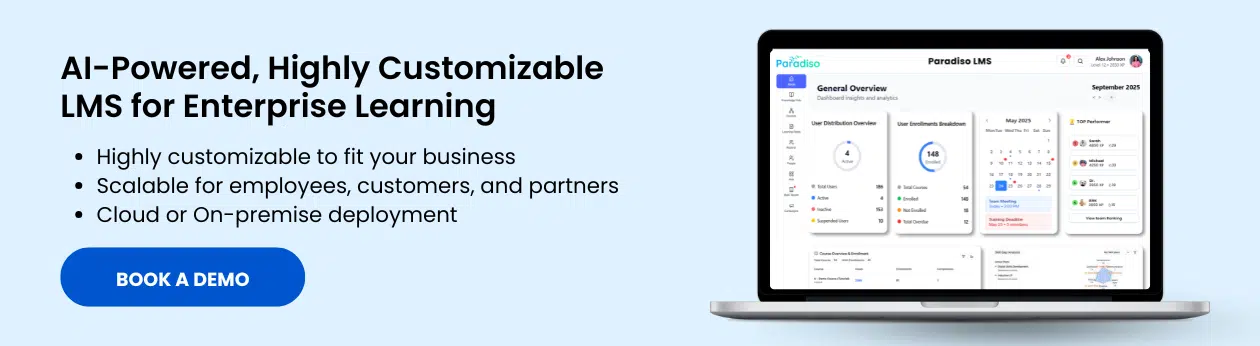
At the forefront is Paradiso LMS, a comprehensive solution offering a user-friendly interface and robust features. Known for its scalability and customization options, Paradiso Solutions caters to diverse training needs. From blended learning to compliance training, its versatility is unparalleled. With advanced analytics and reporting tools, organizations can track learner progress effectively, making Paradiso a top choice for extended enterprise training.

2. Docebo LMS:

Docebo is a cloud-based LMS that emphasizes user-friendly design and AI-driven learning experiences. It excels in scalability, making it suitable for large enterprises. Docebo’s gamification features and social learning capabilities enhance engagement, while its powerful reporting tools provide valuable insights into learner performance.

3. TalentLMS:

TalentLMS is a user-friendly platform known for its simplicity and quick deployment. It caters to various training needs with a focus on e-commerce and extended enterprise training. With mobile compatibility and robust tracking features, TalentLMS ensures seamless learning experiences across devices.

4. SAP Litmos:

SAP Litmos stands out with its intuitive design and mobile responsiveness. Ideal for extended enterprise training, Litmos offers features like built-in video assessments and a vast library of pre-built courses. The platform’s integration capabilities make it a preferred choice for organizations seeking a seamless learning ecosystem.

5. Absorb LMS:

Absorb LMS is a versatile platform that excels in extended enterprise training. Known for its ease of use and strong reporting capabilities, Absorb LMS allows organizations to deliver personalized learning experiences. The platform’s automation features streamline administrative tasks, making it a time-efficient solution.

6. Moodle LMS:

Moodle, an open-source LMS, has gained popularity for its flexibility and customization options. With a robust community and a vast repository of plugins, Moodle is suitable for organizations looking to tailor their extended enterprise training programs. Its cost-effectiveness and scalability make it a compelling choice.

7. Cornerstone OnDemand:

Cornerstone OnDemand LMS is a cloud-based solution known for its talent management and extended enterprise capabilities. With a focus on social learning and collaboration, Cornerstone OnDemand LMS enhances engagement and knowledge sharing. The platform’s analytics tools provide valuable insights for continuous improvement.

8. Schoology Learning:

Schoology is a cloud-based LMS that excels in K-12 and higher education settings. Its intuitive interface and collaboration features make it suitable for extended enterprise training. Schoology’s emphasis on user engagement and interactive learning experiences sets it apart in the LMS landscape.

9. 360Learning:

360Learning is a collaborative learning management system designed to help organizations train employees, partners, and customers through peer-driven learning experiences. The platform focuses on knowledge sharing by allowing teams to create and share learning content directly within the system. It supports extended enterprise training with features such as course authoring, discussion-based learning, analytics, and integration with popular business tools. With its collaborative approach and scalable architecture, 360Learning enables organizations to deliver engaging training programs while keeping learning aligned with real business needs.

10. LearnUpon LMS:

LearnUpon is a cloud-based LMS known for its simplicity and ease of use. With a strong emphasis on customer support and a user-friendly interface, LearnUpon is ideal for organizations transitioning to online training. Its scalability and multitenancy features make it suitable for extended enterprise training.

11. iSpring Learn:

iSpring Learn is an LMS that stands out for its emphasis on content creation and e-learning authoring tools. With robust tracking and reporting features, iSpring Learn ensures organizations can monitor learner progress effectively. Its integration capabilities and mobile compatibility enhance accessibility for extended enterprise training.

12. D2L Brightspace:

D2L Brightspace is a cloud-based learning management system designed to support corporate training, higher education, and extended enterprise learning. The platform offers powerful tools for course creation, personalized learning paths, analytics, and competency-based training. Known for its intuitive interface and strong reporting capabilities, Brightspace helps organizations deliver engaging learning experiences across employees, partners, and customers. With robust integrations and mobile-friendly access, D2L Brightspace enables organizations to scale training programs while maintaining flexibility and learner engagement.

Checklist: Evaluating Your Extended Enterprise Strategy for 2026

To outperform competitors and capture high-authority search rankings, your strategy must address these specific technical and brand requirements. Use the following criteria to evaluate if your current platform is built for the demands of 2026:

  • Total Brand Ownership (CNAME & SMTP): Support for full Custom Domain Mapping and SMTP masking so the URL and all system emails come from yourbrand.com, eliminating vendor footprints.
  • Advanced Multi-Tenant Architecture: The ability to launch and manage hundreds of private, isolated “sub-portals” for different B2B clients or franchises from a single master dashboard.
  • Invisible Infrastructure UI: A clean, minimalist user interface that feels proprietary, removing all visible vendor logos or “Powered by” watermarks.
  • AI-Native Personalization: Integration of branded AI Tutors and Digital Coaches that use your specific brand voice and data to support partners 24/7.
  • Native E-commerce Capabilities: Built-in storefronts to sell courses and certifications directly to your network without paying third-party platform commissions.
  • White-Label Mobile Presence: Native iOS and Android apps listed under your own developer account in the App Store, reinforcing brand credibility.

Strategic Outcome

  • If you checked all the boxes: Your organization is positioned as a market leader with a professional, scalable training engine.
  • If you are missing key bullets: You may be experiencing “brand dilution,” which can lower trust and engagement among your external stakeholders.

Conclusion

The realm of extended enterprise training is rapidly evolving, and the choice of a Learning Management System is pivotal for shaping successful learning outcomes. Paradiso LMS leads the pack with its unmatched versatility and user-friendly interface, providing a comprehensive solution for diverse training needs. Each LMS on this list, from the AI-driven experiences of Docebo to the open-source flexibility of Moodle, offers unique strengths. Cornerstone LMS focuses on talent management, while iSpring Learn emphasizes content creation. The top 12 LMS solutions highlighted here showcase a diverse array of features, scalability options, and user engagement tools, providing organizations with the means to create personalized and effective learning experiences.

In the dynamic landscape of extended enterprise training, the featured LMS platforms offer organizations the tools needed to stay competitive. Whether prioritizing customization, ease of use, or advanced analytics, decision-makers can leverage the strengths of these solutions to foster continuous learning, collaboration, and growth within the extended enterprise. The diversity of features and emphasis on user engagement presented in this blog serve as a comprehensive guide for organizations embarking on their e-learning journey, ensuring they make informed choices tailored to their unique requirements and goals.

Frequently Asked Questions (FAQs) About Extended Enterprise LMS

1. What is an Extended Enterprise LMS?

An Extended Enterprise LMS is a learning management system designed to deliver training not only to internal employees but also to external stakeholders such as partners, suppliers, distributors, resellers, and customers. It helps organizations ensure consistent training across their entire business ecosystem.

2. Why is extended enterprise training important for organizations?

Extended enterprise training helps organizations align partners, customers, and distributors with their products, processes, and brand standards. It improves product knowledge, enhances customer experience, supports partner enablement, and ensures consistent messaging across the business network.

3. What features should an LMS have for extended enterprise training?

An LMS designed for extended enterprise training should include features such as multi-tenancy, role-based user management, integrations with CRM and HR systems, mobile learning support, advanced reporting, and customizable branding for different partner or customer portals.

4. How does multi-tenancy support extended enterprise training?

Multi-tenancy allows organizations to manage multiple training portals within a single LMS platform. Each portal can serve a different partner, department, or customer group with separate branding, courses, and user management while maintaining centralized administration.

5. Which LMS platforms are suitable for extended enterprise training?

Several LMS platforms support extended enterprise learning, including solutions like Paradiso LMS, Docebo, TalentLMS, SAP Litmos, Absorb LMS, and LearnUpon, which provide features such as multi-tenancy, integrations, and scalable training environments.

Follow us!

Do NOT follow this link or you will be banned from the site!